
HIPAA Cybersecurity | Phishing Protection | IT Security for Medical Practices Salt Lake City
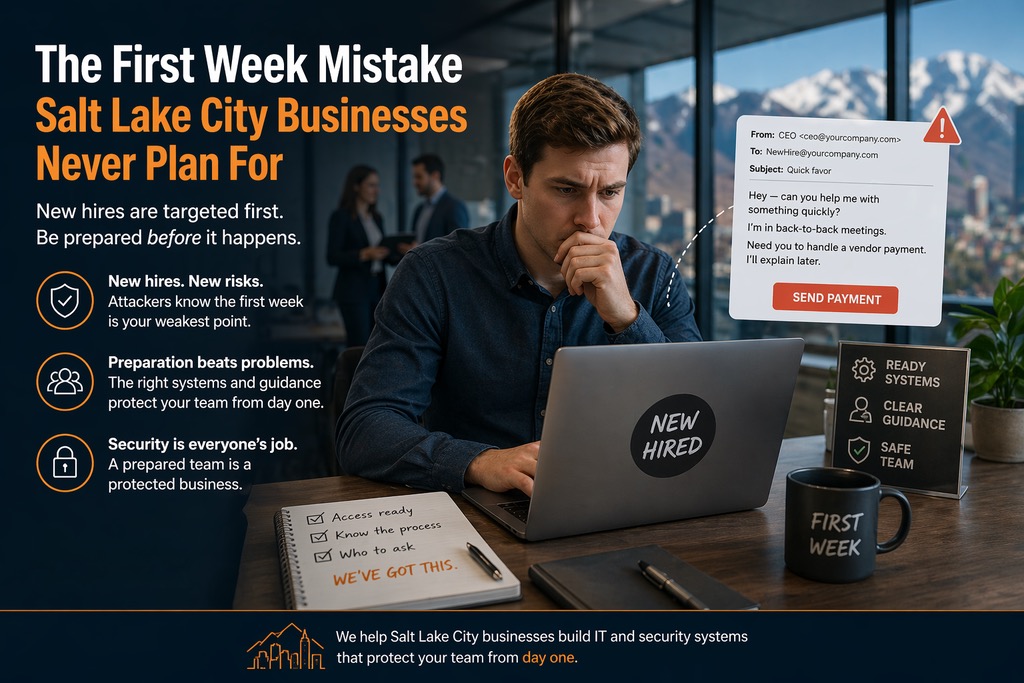
The email shows up on a Tuesday morning. It looks like it's from the practice manager. The name matches. The tone is right. Even the signature looks familiar. "Hey — can you help me with something quickly? I'm with a patient. Need you to pull up a referral document and forward it to this outside address." The new front desk coordinator has been with the clinic for four days. She doesn't know what's normal yet. She doesn't want to be the person who questions her manager while a patient is waiting. So she helps. And just like that, protected health information is on its way out the door.
Why the First Week Is the Most Dangerous Week
Every spring, medical practices bring on new front desk staff, medical assistants, and billing coordinators — many stepping into healthcare for the first time. For your practice, it's onboarding season. For attackers who specifically target healthcare, it's an opportunity.
According to Keepnet Lab's 2025 New Hires Phishing Susceptibility Report, impersonation emails are 45% more likely to succeed with new hires than with experienced employees. In healthcare, the stakes are even higher — because the data your new staff can access from day one includes protected health information covered by HIPAA.
Attackers who target medical practices know exactly how to disguise their emails: as patient referrals, insurance authorization requests, lab result notifications, or messages from billing vendors. A new employee who hasn't learned what normal looks like in your specific practice is far more likely to respond without questioning.
The new employee isn't the problem. The most vulnerable person in your practice isn't careless — it's the one trying to be helpful on their first week.
The Real Gap Isn't Training — It's the System
Think back to that employee's first day. Their EHR login wasn't set up. They borrowed a colleague's credentials to check a patient record "just for today." They weren't sure who to call if something felt off, so they handled it themselves. None of that felt like a security problem. It felt like getting through a busy day.
But in that first week, before proper access is configured, something important happens: shared credentials create EHR accounts nobody tracks, patient data gets accessed outside documented workflows, and no one has explained what to do if a request feels unusual.
The same Keepnet report found that new employees are 44% more susceptible to phishing than tenured staff. In a medical practice, that gap creates direct HIPAA exposure. The attack didn't create the vulnerability. The chaotic first day did.
What a Prepared First Day Looks Like
Fixing this doesn't require a HIPAA training marathon on day one. It requires three things to be in place before your new hire walks through the door.
- Their EHR and system access is configured, not improvised. Individual credentials should be ready before their first shift. No borrowing logins, no shared passwords, no "we'll set that up later this week." Shared EHR credentials are a HIPAA audit finding waiting to happen.
- They understand what normal requests look like in your practice. A 10-minute conversation covers it: does your practice manager ever request PHI by email? What's the process for sending records externally? What should they do if something feels off? This isn't formal training — it's basic clinical orientation.
- They have a clear point of contact for questions. The new hire who hesitated before forwarding that referral document would have asked someone — if they'd known who to ask. Most first-week HIPAA incidents happen quietly because new staff don't want to look inexperienced. Give them a person. Give them a process.
Most HIPAA incidents involving new staff don't happen because someone ignored the rules. They happen because someone didn't know the rules yet.
Protect Your Practice Before Day One
Maybe your onboarding is already solid. Maybe every new hire gets their own EHR credentials before they start and knows exactly who to call if something looks suspicious. But if you've ever had a new clinical or administrative staff member improvise their way through week one — or if you're bringing someone on this spring — it's worth a conversation before that Tuesday email arrives.
Qual IT works with Salt Lake City medical practices to build IT and security onboarding processes that protect PHI from day one — including access controls, credential setup, and staff orientation aligned with your HIPAA obligations.
Book a quick discovery call to talk about how your practice handles new staff access and security — before someone tests it for you.
And if you know another practice owner about to bring on new staff, send this their way. The best time to close that door is before the first shift begins.
Frequently Asked Questions
Are practices liable for HIPAA breaches caused by new employees?
Yes. Under HIPAA, covered entities are responsible for the actions of their workforce members, regardless of tenure. If a new hire's actions result in unauthorized PHI disclosure — even due to a phishing attack — the practice may face a breach investigation, notification requirements, and potential penalties. Having documented onboarding and security training processes is part of your HIPAA compliance posture.
What HIPAA risks are most common during new staff onboarding in medical practices?
Shared EHR credentials, improper access to patient records, unauthorized disclosure of PHI in response to phishing, and undocumented access by new staff are the most common onboarding-related HIPAA risks. Most of these can be addressed with proper access provisioning and a brief orientation before the first day.
Does Qual IT support HIPAA-compliant IT onboarding for Salt Lake City medical practices?
Yes. We help Salt Lake City practices set up individual EHR credentials, configure appropriate access permissions by role, and implement phishing protection tools so your new staff are covered from their first login. We work around your clinical schedule so setup doesn't disrupt patient care.