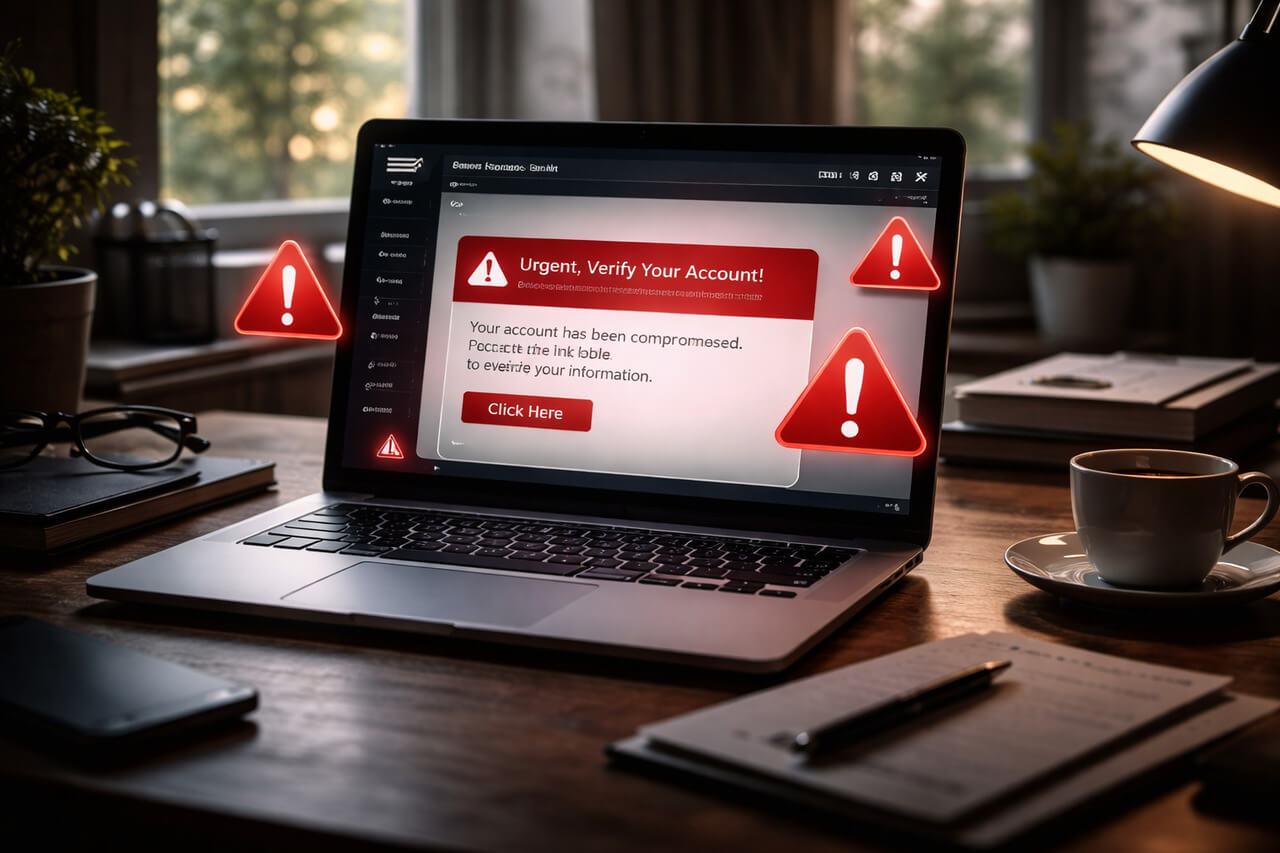
April 1 comes and goes. The pranks and fake announcements that have you second-guessing everything on April Fools Day disappear. Unfortunately, the cybersecurity threats targeting Salt Lake City dental practices don't disappear with them. Spring is one of the most productive seasons for hackers — and Utah dental offices are not immune. Not because your front desk staff or clinical team are careless, but because everyone's busy, a little distracted and moving fast between patient appointments. That's when the almost-believable stuff slips through — a text that looks like it's from your practice management software vendor, an email with a patient record attachment that's actually a phishing link, a request for Dentrix login credentials buried in what looks like a routine message. One click at the reception desk during a busy afternoon can expose all your patient records and dental imaging files.
Here are three active cybersecurity scams hitting Salt Lake City dental practices right now. Not targeting careless people, but sharp, well-meaning staff who are just trying to keep the schedule moving. As you read through these, ask yourself one honest question: Would everyone on my team pause long enough to catch each one?
Scam #1: The Toll Road (or Parking Fee) Text
A staff member gets a text: "You have an unpaid toll balance of $6.99. Pay within 12 hours to avoid late fees." The amount is small. They're between patients, so they click, pay and move on. Except the link wasn't real. The FBI received more than 60,000 complaints about fake toll texts in 2024 alone, and volume jumped 900% in 2025. The reason it works is simple: $6 doesn't feel risky.
The guardrail: Legitimate toll agencies don't demand immediate payment via text. No payments through text-message links. If something might be real, go directly to the official website or app. Convenience is the bait. Process is the defense.
Scam #2: 'Your Patient Record Is Ready'
A front desk staff member receives an email that a document was shared — a patient record from your practice management system (Dentrix, Eaglesoft), an image sharing notification, or a file in Google Drive. The formatting looks exactly like every other file-share notification from your vendors. They click. They're prompted to log in. They enter their practice credentials. Now someone else has them — and full access to patient records, dental imaging files, and billing information. Phishing campaigns abusing trusted platforms like Google Drive and DocuSign increased 67% in 2025. The guardrail: If a shared file wasn't expected, don't click the link — open the browser and log into your practice management system directly. Enable multi-factor authentication on all critical accounts.
Scam #3: The Email That's Written Too Well
AI-generated phishing emails achieved a 54% click rate in 2025, compared to just 12% for human-written ones. These emails reference real vendor names, real job titles, real practice management software — scraped from LinkedIn and your website in seconds. Your billing staff gets fake vendor payment redirects. Your dentist gets fake staff verification requests. 72% of employees engaged with a vendor impersonation email in one recent test. The guardrail: Any request involving credentials, payment changes or sensitive data gets verified through a second channel. Urgency in an email is the warning sign, not the reason to act fast.
What This Means for Your Dental Practice
All of these scams rely on familiarity, authority, timing. The real risk isn't a careless team member. It's a system that assumes everyone will always slow down, even when the schedule is full and patients are waiting. The goal of a strong cybersecurity posture for a dental practice isn't just endpoint security and firewalls — it's process design that protects patient records and dental imaging even when your team is busy. If one rushed click at the front desk could expose all your patient data and Dentrix records, that's a process problem. And process problems are fixable.
FAQ
Q: What are the most common cybersecurity scams targeting Salt Lake City dental practices right now?
A: The most active threats include smishing, phishing through trusted platforms like DocuSign and Google Drive, and AI-generated emails that impersonate vendors and colleagues. All three exploit timing and familiarity — especially at the reception desk during busy hours.
Q: How can I protect my dental team from phishing and IT security threats?
A: Combine process and technology. Staff verify unexpected requests through a second channel, never pay via text links, and treat email urgency as a red flag. Multi-factor authentication on practice management systems, endpoint security, and security awareness training significantly reduce exposure to patient record theft and HIPAA violations.
Q: What does HIPAA compliance have to do with phishing and cybersecurity for my dental practice?
A: HIPAA requires you to safeguard all patient records and protected health information (PHI), including dental imaging and treatment records. A successful phishing attack that exposes patient data can result in significant HIPAA fines and damage to your practice reputation. We work with Salt Lake City dental practices to implement security measures that protect patient data and keep your practice HIPAA-compliant.
Q: Does Qualit offer cybersecurity services for dental practices in Salt Lake City?
A: Yes. Qualit provides cybersecurity and managed IT services for dental offices throughout Salt Lake City and the greater Utah area, including phishing protection, endpoint security, proactive threat monitoring, and HIPAA-compliant backup solutions.
Ready to Secure Your Dental Practice?
Most Salt Lake City dental practice owners don't want to become the in-house cybersecurity expert. They just want to know their patient records, dental imaging files, and practice systems aren't quietly exposed. We'll cover:
- The cybersecurity risks Salt Lake City dental practices like yours are seeing right now
- Where phishing and security issues tend to sneak in through normal, everyday work at the front desk and operatory
- Practical ways to reduce exposure and protect patient data without slowing your team down
No pressure. No scare tactics. We work with Salt Lake City dental practices to keep systems running and patient data secure.