
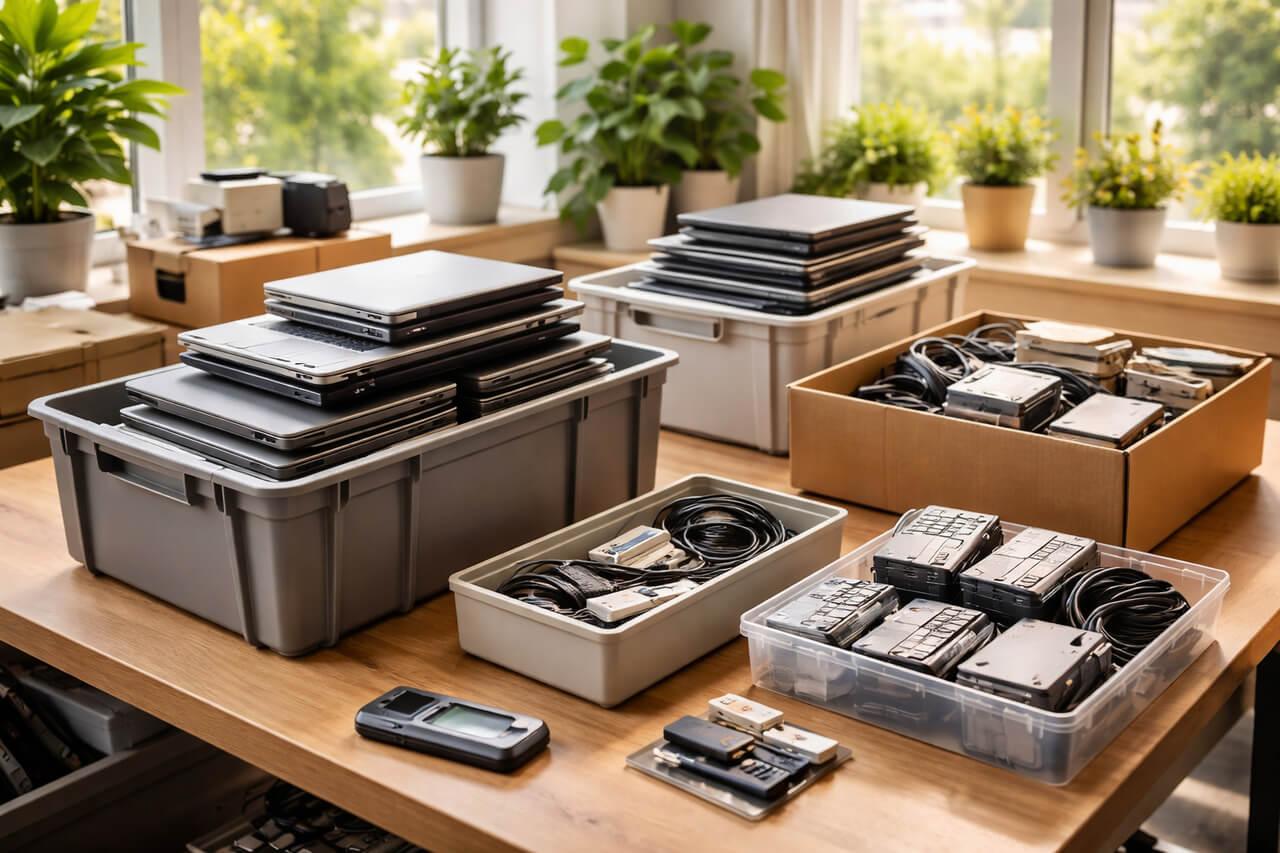
Spring cleaning usually starts with closets — but for most Salt Lake City dental practices, the real clutter isn't just in the storage room. Old laptops in the back office. Retired digital X-ray systems. Backup drives from three software upgrades ago. Older computer workstations that were decommissioned when you upgraded to your latest Dentrix or Eaglesoft setup. Every practice accumulates this stuff. The question is whether you have a plan for what happens next — especially when that old equipment may still contain patient records, dental imaging files, or practice data.
Technology Has a Lifecycle — Not Just a Purchase Date
Most Salt Lake City dental practices plan how they buy technology. Few plan how they retire it. Old computers, digital X-ray systems, and backup devices still have usable value, recyclable components, and stored access or data. A single retired hard drive from an old Dentrix workstation or imaging system might still contain complete patient records and protected health information (PHI). A proactive hardware lifecycle plan prevents old equipment from becoming a security risk, a HIPAA violation, or an operational drag.
A Practical Four-Step Framework
Step 1: Inventory — what are you actually retiring?
Step 2: Decide the Destination — reuse, recycle, or destroy.
Step 3: Prepare the Device Properly — A Blancco study found 42% of resold drives still contained sensitive data. For dental equipment, this means patient records and dental imaging files. A certified data erasure tool overwrites every sector and provides a verification report. For commercial healthcare equipment in Utah, use a certified ITAD (IT Asset Disposition) provider with e-Stewards or R2 certification — they understand HIPAA requirements.
Step 4: Document and Move On — know where it went, how it was handled, and that patient data access was removed. Keep records for your HIPAA compliance file.
Devices Dental Practices Tend to Forget
Phones and tablets may still contain email access, Dentrix login credentials, and authentication apps. Digital X-ray systems and imaging workstations may have local copies of patient radiographs — very high-value PHI. Printers and copiers frequently include internal hard drives storing copies of everything printed, scanned, or faxed — that's practice management data, patient records, billing information. Older backup servers and external drives tend to live in closets longer than planned. Batteries from aging equipment are hazardous waste.
The Bigger Opportunity
Clearing out outdated equipment is good housekeeping. Making sure your technology stack aligns with your goals keeps you moving forward. It's worth asking: Is our technology supporting how we want to run this practice? Are our digital X-ray systems, practice management software, patient communication tools, and backup systems working together, or is our front desk staff managing workarounds?
FAQ
Q: How often should Salt Lake City dental practices review and retire old IT equipment?
A: Most IT providers recommend a hardware lifecycle review every 12–18 months. A managed IT services partner can help you build a proactive plan and ensure old equipment — especially devices that may contain patient records or dental imaging — is properly handled.
Q: What are the data security risks of improperly retiring IT equipment in a dental practice?
A: Significant, especially for HIPAA compliance. A Blancco study found 42% of resold drives still contained sensitive data. For dental practices, this means patient records, X-rays, and treatment history exposed. Improper disposal of PHI can result in HIPAA violations, fines, and damage to patient trust. Certified erasure tools and HIPAA-compliant disposal services are the standard.
Q: How do I know if my dental practice needs to update its hardware lifecycle and IT asset management plan?
A: If you have equipment sitting in storage, or you're unsure whether old computers or imaging systems have been properly wiped, that's a signal. If you've never had a formal technology review, that's another. A managed IT services provider can assess your environment and recommend a plan.
Q: Can a managed IT services provider help with hardware disposal and lifecycle planning for dental practices?
A: Yes. Qualit provides managed IT services for dental practices throughout Salt Lake City and the greater Utah area, including hardware lifecycle planning, certified data erasure, HIPAA-compliant asset disposition, and vendor coordination.
Ready to Clean Up Your Technology?
While you're thinking about replacing old hardware, it's also a good time to review the bigger picture. Are your systems streamlined? Are your tools working together? Is your team managing workarounds for things that should just work?