
July 2026 | HIPAA IT Support for Dentists Salt Lake City | Dental Practice IT Services Utah | Compliance & Cybersecurity
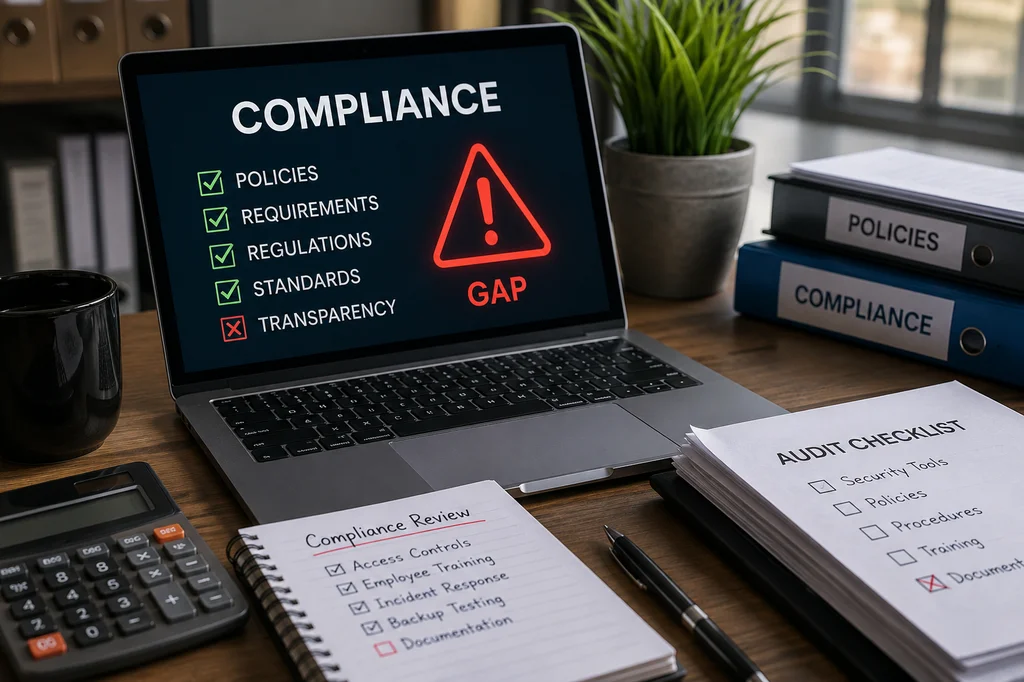
Not all HIPAA failures start with a breach — but they all start with assumptions.
A Salt Lake City dental practice can have Dentrix running, backups configured, and a business associate agreement on file with every vendor — and still be unclear on what's actually working, what's actually documented, and what would actually hold up under scrutiny. When a patient files a complaint, when a cyber incident forces a closer look, or when your cybersecurity insurer asks for documentation at renewal time, assumptions aren't enough. You need to know what's in place, what's current, and what needs attention.
At that point, HIPAA compliance stops being a checkbox and starts becoming a cost — measured in fines, legal exposure, remediation expenses, and the kind of patient trust that takes years to build and one incident to damage.
Unfortunately, most dental practices don't discover their compliance gaps during normal operations. They discover them under pressure — when the answer is needed immediately and the stakes are already high. Here are four compliance gaps that regularly cost dental practices thousands when left unchecked.
Gap 1: Security Tools Nobody Actually Monitors
Most Salt Lake City dental practices already pay for security tools: endpoint protection on the workstations, antivirus on the server, email filtering, maybe multifactor authentication on the Dentrix login or the patient portal. On paper, the practice looks covered.
The problem is ownership. Who confirms those tools are actually configured correctly for a dental practice environment — where the same network carries imaging data, patient records, and the front desk's internet browsing? Who checks that the endpoint protection is installed and updated on every device, including the iPad at the check-in station and the laptop the office manager takes home? Who reviews the alerts when something gets flagged? Who catches failed updates on the Carestream or Dexis workstation?
Security software can't protect what it doesn't see. It can't respond to alerts nobody reads. It can't close gaps left open by weak configuration, partial deployment across your workstations, or warning signs that got ignored during a busy week.
From a distance, your dental practice IT security looks solid. Under closer scrutiny — the kind an auditor or insurer applies — the picture often changes. Paying for the tool is step one. The protection comes from how that tool gets managed, monitored, and maintained month after month, across every device in your practice. That distinction matters during a HIPAA audit, a cybersecurity insurance renewal, and a conversation with a patient who asks how their data is being protected.
Gap 2: Dental Staff Behavior That Creates HIPAA Risk
Your dental team isn't trying to create compliance problems. They're trying to get work done — efficiently, between patients, with the tools they have available.
That's exactly why so many HIPAA issues in dental offices come from routine behavior: a clinical assistant texts a patient's X-ray image to a specialist using her personal iPhone because the secure file transfer is slower. The front desk coordinator accesses Dentrix from her personal laptop at home to pull up tomorrow's schedule, because the office computer is already being used. An office manager emails a patient's treatment plan to the patient's insurance company using a regular email account instead of the secure channel.
None of these feel like violations in the moment. All of them can be. Under HIPAA, the transmission of protected health information — patient records, X-ray files, treatment plans, insurance information — must occur through channels that meet specific security standards. Personal devices, personal email accounts, and consumer texting apps don't meet those standards.
The compliance problem here isn't that your dental team is careless. It's that the everyday shortcuts become compliance gaps when no one reviews or corrects them. Staff need clear expectations, practical guidance, and systems that make the secure behavior the easy behavior — not just a policy document they signed during onboarding and haven't thought about since.
For Salt Lake City dental practices operating under HIPAA, unreviewed staff behavior is one of the most common sources of compliance risk — and one of the most straightforward to address with the right training and the right tools.
Gap 3: HIPAA Documentation That Gets Built After Someone Asks
HIPAA requires documentation. Not just security controls — documentation of those controls. A current security risk analysis. Policies and procedures for how patient data is handled, transmitted, and protected. Records of who has access to protected health information and why. Business associate agreements with every vendor who touches patient data. An incident response plan. Training records showing when staff completed security awareness training.
Most dental practices have some of this. Few have all of it current, complete, and easy to produce on demand.
The pattern looks like this: the security risk analysis was done three years ago and hasn't been updated since the practice added a new imaging system and two new operatories. The business associate agreement with the billing service is on file, but no one is sure whether the patient communication platform has one. The training records from last year are in a spreadsheet somewhere. The incident response plan references a server that was replaced eighteen months ago.
Scrambling to build or update documentation after a HIPAA audit begins — or after an incident forces a review — creates mistakes and raises doubts about whether proper controls were being followed in the first place. It also signals to auditors that compliance is reactive, not managed.
Strong HIPAA compliance for a dental practice means policies are reviewed before audits, access records are maintained before disputes arise, vendor agreements are tracked before client requests, and incident response plans are written and tested before incidents happen. Documentation needs to be current, complete, and easy to produce on demand — not reconstructed under pressure.
Gap 4: Your Practice Grew, but Your IT Security Didn't Keep Pace
This is the gap that matters most in a midyear review, because your Salt Lake City dental practice may have changed significantly more than your security posture has in the first half of this year.
You added a new operatory and the imaging workstation that came with it. You brought on a new dental hygienist and set up her login in Dentrix without reviewing whether the access permissions were appropriate for her role. You signed with a new billing service and executed a business associate agreement, but no one audited what systems they can actually reach. You started using Curve Dental or moved part of your records to a cloud platform, but the backup plan wasn't updated to cover cloud data. Your front desk staff doubled because you took on more patients — and the security training you did three years ago never got updated.
A setup built for a two-operatory, two-staff practice may not be adequate for a four-operatory, six-staff practice. Backup coverage configured for on-premise Dentrix may not protect cloud-based imaging archives. Access rules that made sense when your office manager was the only person doing billing may be too permissive now that you have a dedicated billing coordinator and an outside service.
That's how dental practices outgrow their protection — not through negligence, but through growth that IT security didn't keep pace with. And under HIPAA, the requirement to maintain a current security risk analysis means this isn't just an IT hygiene issue. It's a compliance obligation.
A midyear IT security review for your Salt Lake City dental practice helps confirm whether your current controls align with how the practice actually operates today — not how it operated when the systems were last configured.
The Real Cost of Finding Out Late
HIPAA penalties for dental practices range from $100 to $50,000 per violation, per day, depending on the nature of the violation and whether the practice knew about the gap. That's not a hypothetical range — it's the actual penalty structure that applies to your practice if a breach, a patient complaint, or a random audit reveals something that should have been addressed.
Beyond the fines: remediation costs, potential legal exposure, cybersecurity insurance complications, and the patient trust that's difficult to quantify but easy to lose. Patients expect their dental records, X-ray images, and insurance information to be handled carefully. When a practice demonstrates that it wasn't, that expectation becomes a liability.
The time to find these gaps is before someone else does. A focused HIPAA IT compliance review for your Salt Lake City dental practice can surface where you're exposed, where your security setup has drifted from your current operations, and whether today's controls would actually hold up under scrutiny.
Frequently Asked Questions
Do you offer HIPAA-compliant IT services for dental offices in Salt Lake City?
Yes. Qual IT provides HIPAA-compliant IT services specifically designed for Salt Lake City dental practices, including security risk assessments, access control reviews, backup and recovery testing for patient records and imaging archives, business associate agreement documentation support, and ongoing compliance monitoring. We understand the specific requirements dental offices face under HIPAA and build our services around them.
What are the most common HIPAA compliance gaps for Salt Lake City dental practices?
The most common gaps include unmonitored security tools on practice workstations, staff behavior around patient data transmission (texting X-rays, accessing Dentrix from personal devices), outdated or incomplete HIPAA documentation, and security setups that haven't kept pace with practice growth — new operatories, new staff, new software. A proactive HIPAA IT review can identify all of these before they become costly.
How does HIPAA compliance affect cybersecurity insurance for Utah dental practices?
Cybersecurity insurers increasingly require documented evidence of active controls — not just installed tools. Dental practices without proof of monitoring, backup testing, access reviews, employee training records, and current security risk analyses may face higher premiums, claim denials, or coverage gaps at renewal. Insurers are asking harder questions about healthcare practices in particular.
How often should Salt Lake City dental practices review their HIPAA compliance posture?
HIPAA requires a security risk analysis whenever significant changes occur in your environment — new systems, new staff, new vendors, new operatories. At minimum, dental practices should conduct a formal review annually. A midyear check-in is strongly recommended, particularly after changes in the first half of the year. Practices in the middle of growth or software transitions should review more frequently.
Close the Gaps Before They Cost You
We work with Salt Lake City dental practices to keep systems running and patient data secure. Qual IT helps dental practices identify HIPAA compliance blind spots, strengthen IT security controls, and confirm that today's setup still aligns with today's requirements — and today's practice, not the one you had two years ago.