Cybersecurity | Salt Lake City Engineering Firms | Technical IT Security
School's out, which means for many Salt Lake City engineering firm principals and project staff the workday doesn't look quite the same as it did a few weeks ago.
Maybe you're starting earlier so you can wrap up before picking up the kids. Maybe you're working from home more — with AutoCAD Civil 3D open on one monitor, Newforma on another, and considerably more background noise than the office provides.
Either way, your engineering team is adjusting to the new rhythm, and cybercriminals are adjusting right along with you.
This Isn't Your Normal Project Workflow
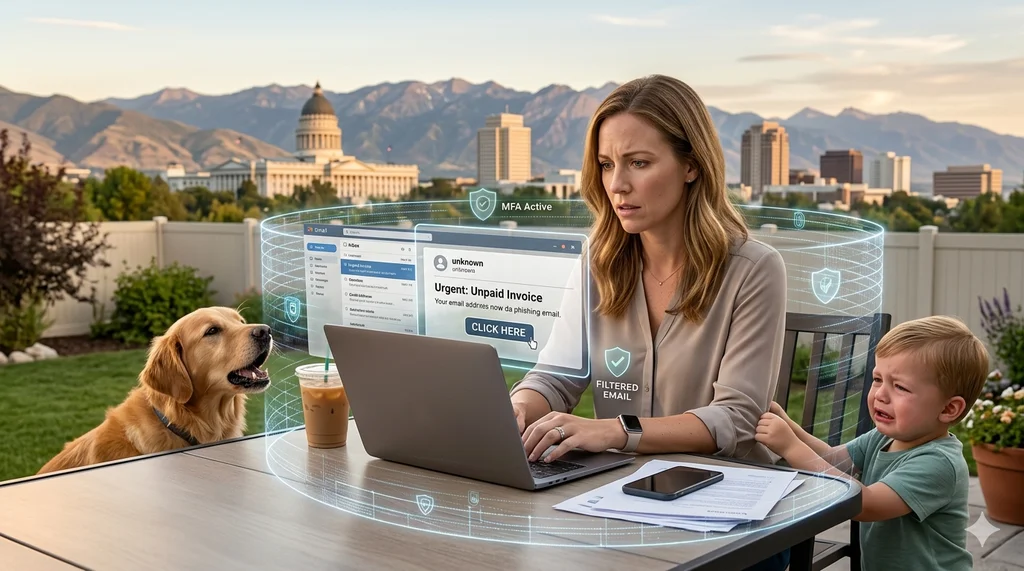
Hackers know the summer schedule shift, and they plan around it. When your day is fragmented — jumping between project submittals, subconsultant coordination, and design reviews — all it takes is one well-timed moment.
Not a major lapse. Just a quick decision made while your attention is split between a structural calculation in ETABS and an email flagged urgent by a project manager.
Summer creates more of those moments because routines are less consistent and distractions are higher. For Salt Lake City engineering firms, project work happens in between everything else. And when that's the case, speed tends to win over scrutiny.
That's where the real cybersecurity risk starts.
Cybercriminals don't rely on big, obvious scams. They send messages that look routine — a project invoice, a shared drawing in Newforma, a quick request that appears to come from a subconsultant — designed to catch your project staff in the middle of something else. Not when they're focused. When they're busy.
In that moment, it's easy to move quickly instead of looking closely. That's when the click happens.
The Click Isn't the Problem — It's What That Click Has Access To
When an engineer clicks a phishing link or downloads a malicious attachment, it doesn't stop there. It opens the door to email accounts, project files in Newforma, AutoCAD Civil 3D drawings, engineering calculations, and the systems your Salt Lake City firm relies on every day.
None of these operate in isolation, so once access is gained, it rarely stays contained.
From there, malware can move quietly through your environment, spreading across accounts, accessing proprietary design files and project specs, or disrupting critical workflows before anyone realizes what's happening. By the time it's noticed, the impact extends well beyond a single mistake — and may include IP exposure that affects your firm's competitive position and client obligations.
At that point, the issue isn't just a bad click. It's everything that click was able to reach: project deliverables, engineering documents, client data, and subconsultant coordination files.
Why 'Just Be More Careful' Doesn't Work for Engineering Teams
It's easy to say the solution is for project staff to be more careful. But that assumes engineers have uninterrupted time to stop and evaluate every click.
They don't.
Project work moves quickly. Attention is split between design software, client communications, and deadline-driven deliverables. People are juggling submittals, responding to RFIs, and coordinating with subconsultants across multiple active projects. That's why the goal shouldn't be perfect attention — it should be building systems that don't rely on it.
What Actually Protects Your Engineering Firm
If your engineering team is moving fast, getting interrupted, and managing more than usual this summer, your cybersecurity must account for that. The right guardrails help ensure a normal project day doesn't turn into a security incident that compromises proprietary calculations or client deliverables.
That means limiting what a single mistake can affect and catching problems before they spread. In practice, putting guardrails in place looks like:
- Using unique passwords for every login — including Deltek Vantagepoint, Newforma, and project collaboration platforms — so one compromised account doesn't unlock everything else
- Turning on multi-factor authentication so a password alone isn't enough to access engineering systems
- Filtering and flagging suspicious emails before they reach your project staff, so fewer risky decisions can be made in the first place
- Making it easy for someone to pause and ask, "Does this look right?" — especially when a message claims to be from a subconsultant or client requesting access to project files
None of this depends on perfect behavior. It's designed for real project days where engineers move quickly, get interrupted, and don't have time to second-guess every notification.
What to Do Now While Things Still Feel 'Mostly Fine'
If someone on your project staff makes the wrong click this afternoon, is it a small issue or something that spreads across your engineering systems? Would you catch it right away, or only after project files in AutoCAD Civil 3D and Newforma have already been accessed?
Summer doesn't create these risks. It just makes them easier to miss.
If your Salt Lake City engineering firm still depends on everyone catching everything perfectly, it's time to take a closer look before the pace picks up again.
Frequently Asked Questions
Do you offer IT support for engineering firms and technical consultancies in Salt Lake City?
Yes. Qual IT works with Salt Lake City engineering firms — civil, structural, mechanical, and specialty — to put the right security guardrails in place. From multi-factor authentication to email filtering and security awareness training, we make sure one distracted moment doesn't compromise project files or engineering calculations.
What is phishing and why is it a bigger risk in summer for engineering teams?
Phishing is when attackers send messages that look routine — project invoices, shared drawings, subconsultant requests — designed to trick someone into clicking. Summer increases the risk because routines are disrupted, schedules are less predictable, and project staff are more distracted, which is exactly the environment attackers plan around.
How quickly can Qual IT respond if something goes wrong at our engineering firm?
Our team monitors systems proactively, which means we often catch issues before they affect project workflows. When something does go wrong, we respond quickly so the impact stays small instead of spreading across your project data and engineering systems.
We work with Salt Lake City engineering firms to protect project data and support technical workflows.
Let's make sure one mistake doesn't compromise your engineering documents or halt a project delivery. Book a quick discovery call and we'll show you exactly where your firm stands.
And if you know another principal or project engineer trying to balance technical work while everything else competes for attention this time of year, send this their way.