
Cybersecurity | Ransomware Protection | Managed IT Services Salt Lake City
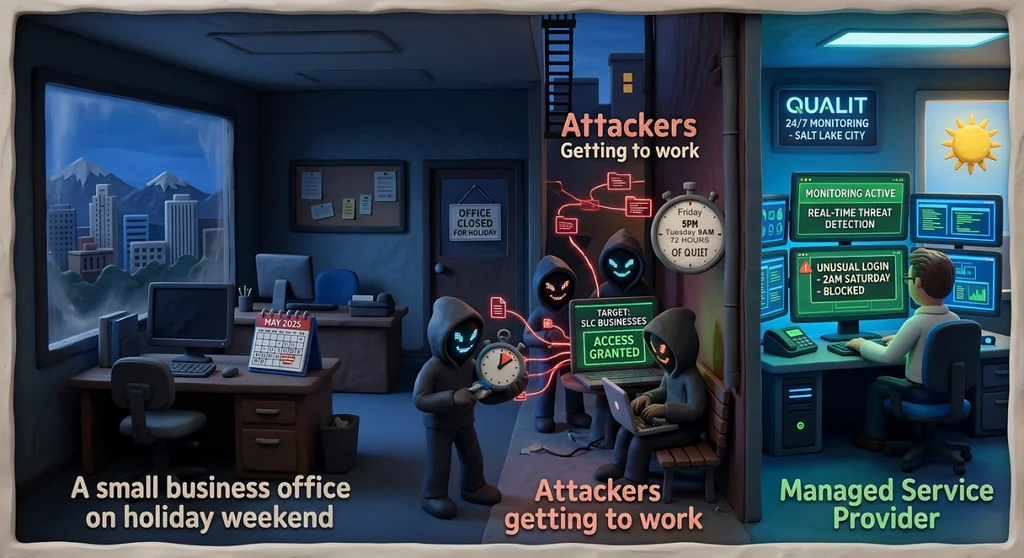
While you're firing up the grill or sitting in beach traffic, someone else is getting to work. They've been planning for this. They know which Salt Lake City businesses will be running on skeleton crews and which alerts will go unanswered. They know that at most small businesses, the "IT person" is the one who gets called when the printer breaks — not someone actively watching a security dashboard at midnight.
They also know that the window between Friday afternoon and Tuesday morning is 72 hours of quiet. They've been looking forward to Memorial Day too — but not for the same reasons as you.
According to Semperis's 2025 Ransomware Holiday Risk Report, 52% of organizations hit by ransomware were attacked on a holiday or weekend. That's not a coincidence. That's a strategy.
The question isn't whether someone is targeting businesses like yours on a holiday weekend. The question is: who's watching when it happens?
The 48-Hour Window
The vulnerability doesn't start when the weekend begins. It starts when people begin mentally checking out. That's usually around Wednesday.
By Thursday afternoon, small shortcuts start creeping in. Someone shares their login because a coworker needs quick access and IT isn't available to set it up properly. A vendor gets temporary credentials that nobody documents. A contractor finishes a project, but their access isn't removed because the person responsible is already on the road.
Friday is where things really start to slip. Sessions stay open. Laptops don't get locked. The small habits that quietly keep systems secure during a normal week — the ones nobody thinks about because they're routine — start to fall off as everyone rushes to finish up and leave.
None of these feels reckless. It feels normal. But those "normal" decisions don't get revisited until Tuesday morning. And by then, there's been a long window where no one is paying attention. The business didn't leave for the weekend. The people did.
Who's Working While You're Away
Here's the mismatch most Salt Lake City small businesses don't think about until it's too late.
On one side, there's a criminal operation that has already done its homework. They know your software stack. They've tested your login pages. They're waiting for a quiet moment to move. This is their job, and they're good at it. Semperis found that 78% of companies reduce security staffing by at least half during weekends and holidays. Attackers know this — and they plan around it.
On the other side: who's there? For most small businesses, the honest answer is no one. Or there's a phone number — a reliable IT person you can call when something breaks. But they're not watching your systems at midnight on a Saturday. They're not seeing a login attempt from an unusual location at 2 AM. They're not analyzing unusual network traffic while you're at the beach. They're waiting for you to call. And you can't call if you don't know anything is wrong.
That's the gap. Not just thinner defenses, but a reactive model going up against a proactive one. That's not even a match.
What It Looks Like When the Match Is Even
A managed service provider doesn't just fix things when they break. In a stronger model, monitoring runs continuously — whether it's a Thursday afternoon or the middle of a holiday weekend. Systems flag unusual behavior early: a login from a new location, a file transfer that doesn't match normal patterns or an access attempt on a system that shouldn't be active. Those alerts go to a team that knows what to do with them — not to a voicemail that won't get checked until Tuesday.
It also means preparing before the weekend starts. Reviewing access. Checking credentials. Making sure you have a clear understanding of who can access what and whether anything needs to be cleaned up before the office empties out. Not because something is wrong, but because if something is, you want to know before everyone leaves — not after they come back.
Security isn't tested when something breaks. It's tested when no one is watching.
Is Your Salt Lake City Business Protected When No One Is in the Office?
You may already be in good shape here. If someone's monitoring your systems around the clock, you're ahead of where most businesses are. But if your approach is to wait until something breaks and then make a call, it's worth rethinking before the next long weekend rolls around.
Qual IT provides managed IT services and 24/7 monitoring for Salt Lake City businesses — so your systems are protected whether your team is in the office or out of town.
Schedule a 10-minute discovery call to talk about what your current security coverage looks like during holidays and weekends.
And if you know a business owner heading into the long weekend with nothing between their business and a professional criminal operation except hope — send this their way. Because attackers don't wait for weaknesses. They wait for silence.
Frequently Asked Questions
Why are holiday weekends so dangerous for small business cybersecurity?
Attackers specifically target holiday weekends because businesses run on reduced staff, monitoring is minimal and response times are slow. The gap between when an attack starts and when someone notices can be 48 to 72 hours — more than enough time for significant damage. Salt Lake City businesses with lean teams are especially vulnerable during these windows.
What does 24/7 IT monitoring actually include?
Around-the-clock monitoring means your network, devices and systems are being watched for unusual activity at all times — not just during business hours. This includes flagging login attempts from unusual locations, unexpected data transfers and access to systems outside of normal hours. When something looks off, a team responds immediately rather than waiting for you to call.
How can Qual IT help Salt Lake City businesses stay protected during holiday weekends?
We provide continuous network monitoring, proactive threat detection and pre-holiday security reviews for Salt Lake City businesses. That means checking access credentials, reviewing who has permissions and making sure nothing is left open before your team heads out — so you can enjoy the weekend without worrying about what's happening to your systems.