
HIPAA Cybersecurity | Phishing Awareness | IT Support for Dental Offices Salt Lake City
Introduction
Spring is one of the busiest hiring seasons for dental practices. A new front desk coordinator joins, a dental assistant moves from another office, or a hygienist starts mid-season. The first week is a blur of introductions, login credentials, scheduling software training, and learning which provider likes which instrument setup. In that chaos, security awareness is rarely top of mind — and attackers know it. Your newest team members are statistically your most vulnerable ones, and they often have access to Dentrix, patient records, and billing systems from day one.
Why New Dental Team Members Are a High-Value Target
Research from Keepnet (2025) found that CEO impersonation attacks are 45% more effective against new employees. Separately, studies show new hires are 44% more susceptible to phishing attempts than their longer-tenured colleagues. The reasons are straightforward:
- They don't yet know what normal communication looks like at your practice.
- They're eager to help and less likely to push back on an unusual request.
- They're overwhelmed with onboarding and not watching for red flags.
- They may not yet know the right person to ask if something seems off.
In a dental practice, the front desk is the most common phishing entry point. Your front desk team handles email, phones, patient communication platforms like Weave, and billing inquiries. A phishing email impersonating a vendor, your dentist-owner, or a patient can land in their inbox on day two of the job.
What a New-Hire Phishing Attack Looks Like at a Dental Practice
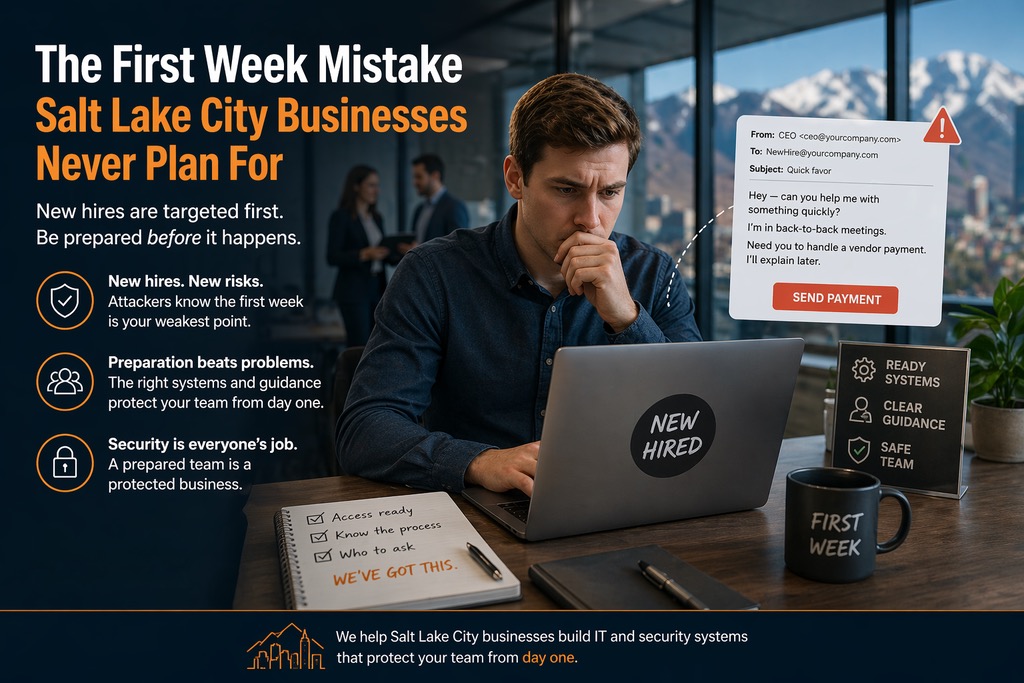
Here's a realistic scenario: A new front desk coordinator receives an email that appears to be from the practice owner. It says a vendor payment is overdue and needs to be processed today before a patient appointment gets cancelled. The email looks legitimate — it has the dentist's name, the practice name, maybe even a logo. The new employee, not wanting to cause problems, processes the payment.
Or: A new dental assistant gets a message appearing to be from your Dentrix support team asking her to verify her login credentials due to a system update. She's been using Dentrix for a week and has no baseline for what legitimate support communication looks like.
Both scenarios are common. Both exploit the new-hire window.
Three Fixes That Protect Your Practice
1. Configure Access Before the First Day
Don't hand out broad system access and figure out restrictions later. Before a new team member starts, determine exactly what they need access to in Dentrix, your billing software, and your patient communication tools — and provision only that. Limiting access by role reduces the damage if credentials are compromised.
This is also a HIPAA best practice: minimum necessary access to ePHI.
2. Show New Team Members What Normal Looks Like
Spend fifteen minutes during onboarding walking through examples of legitimate vendor emails, how the practice owner actually communicates urgent requests, and what your IT provider's support messages look like. When new hires have a mental model of normal, they're better equipped to spot abnormal.
Tell them explicitly: the practice owner will never ask you to transfer money or share login credentials via email.
3. Give Every New Hire a Security Point of Contact
New employees need to know who to ask when something seems off. Designate a specific person — whether that's the office manager, the practice owner, or your IT provider — and make sure every new team member knows how to reach them with a quick question. The goal is to make it easy to pause and verify, rather than just comply.
The Front Desk Is Your Practice's Security Perimeter
In most dental practices, the front desk handles more communication — and more risk — than any other role. They are the first line of contact for patients, vendors, and increasingly, for attackers. Investing in their security awareness is not optional; it's a HIPAA safeguard requirement under the workforce training provisions of the Security Rule.
Frequently Asked Questions
Q: Does HIPAA require security training for new dental employees?
Yes. HIPAA's Security Rule (45 CFR § 164.308(a)(5)) requires covered entities to implement a security awareness and training program for all workforce members, including new hires. Training on phishing recognition is directly relevant to protecting ePHI.
Q: How do we know if a phishing email has already affected our practice?
Signs include unexpected login alerts from Dentrix or other platforms, unexplained changes to vendor payment information, unusual patient record access outside business hours, or a new hire reporting a suspicious message after the fact. A managed IT provider can monitor for these indicators in real time.
Q: Our team is small. Is phishing really a risk for a one- or two-dentist practice?
Yes — small dental practices are frequently targeted because attackers assume they have fewer security controls. Your patient data has significant value on the black market, and you are subject to the same HIPAA requirements as a large health system. Size does not reduce the risk; it often increases it relative to your security investment.
Protect Your Practice Before the Next New Hire Starts
We work with Salt Lake City dental practices to keep systems running and patient data secure. If you're adding staff this spring and want to make sure your onboarding process includes proper access controls and security training, let's talk.