HIPAA Cybersecurity | Password Security | IT Support for Medical Practices Salt Lake City
Picture your front desk coordinator logging into your EHR system — Epic, Cerner, or Athenahealth — with the same password she's used for the past two years. The same one she uses for the patient portal. The same one a dozen other staff members know because someone shared it during a busy week. For Salt Lake City medical practices, this isn't an edge case. It's how most small practices actually operate. And it's exactly the kind of opening a cyberattacker is looking for.
The Reuse Problem
A typical breach doesn't usually start within your practice. It starts somewhere else entirely: a shopping site, a food delivery app, a subscription someone signed up for three years ago and forgot about. That company gets breached, and suddenly your clinical staff's email and password are part of a database being sold on the dark web.
From there, attackers get efficient. They take that same login and try it everywhere: your EHR system, your patient portal, your billing platform, your practice management software. One breach. One reused password. Now patient records, PHI, and billing data are all potentially accessible.
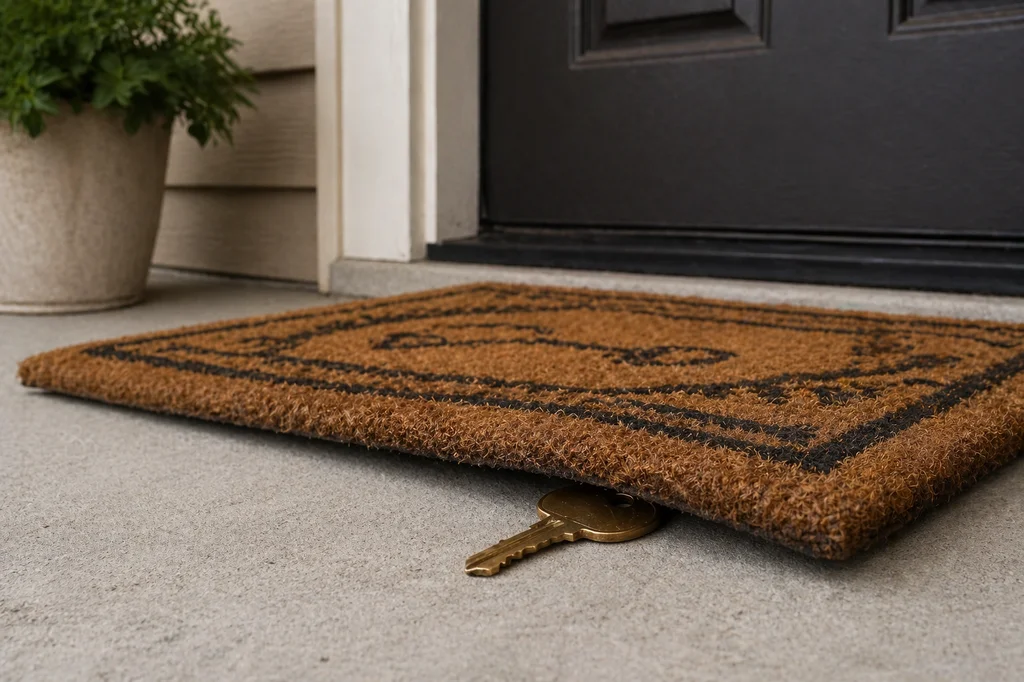
Think about carrying one physical key that opens your clinic, your records room, your billing office and every staff account for the past five years. Lose it once — or have someone copy it — and everything is accessible. That's what password reuse really does in a medical practice. It turns one compromised credential into a master key for your entire patient care operation.
A Cybernews study of 19 billion passwords exposed in breaches found that 94% are reused or duplicated across multiple accounts. That's not a small oversight. That's nearly every clinical staff member leaving multiple doors unlocked — including the ones protecting protected health information (PHI).
This type of attack is called credential stuffing. It's automated software running stolen credentials against your EHR, billing system, and email simultaneously while your practice sleeps. By the time you find out, HIPAA's 60-day breach notification clock is already ticking.
Security doesn't fail because passwords are weak. It fails because the same password is used in too many places. Strong passwords protect individual accounts. Unique passwords protect your entire practice — and your patients.
The Illusion of 'Strong Enough'
Many Salt Lake City practice owners feel covered because their EHR password includes a capital letter, a number and a symbol. That may have been adequate in 2006, but the landscape has changed significantly — especially for healthcare, which remains the number one ransomware target.
Modern attacks use tools that can test billions of password combinations per second. "P@ssw0rd1" fails in seconds. And even a genuinely strong password is still just one layer of protection. One phishing email disguised as a patient referral or insurance authorization, one vendor breach or even one sticky note at the reception desk can undo it.
Relying on passwords alone is a security model from 2006. The HIPAA Security Rule expects more — and so do the attackers targeting healthcare.
The Deadbolt Layer: Password Managers and Multi-Factor Authentication
If your EHR password is the lock, multi-factor authentication (MFA) is the deadbolt — and for HIPAA compliance, it's increasingly considered a baseline requirement.
A password manager — tools like 1Password, Bitwarden or Dashlane — generates and stores a unique, complex password for every system in your practice. Your clinical staff never has to remember them, and more importantly, they don't reuse them. The password for your EHR looks nothing like the one for your billing platform, which looks nothing like the one for your patient portal.
Multi-factor authentication adds another layer. It requires something your staff knows (their password) and something they have (a code from an app like Microsoft Authenticator). Even if someone obtains a staff member's credentials, they still can't access patient records without that second factor.
Neither of these requires an IT degree. Both can be implemented in an afternoon. Together, they close most credential-based attack vectors before they reach your patient data.
Good security isn't about making staff memorize complicated passwords. It's about designing systems that protect PHI even when people make normal human mistakes — because in a busy clinic, they will.
Is Your Salt Lake City Practice Protected?
Maybe your credentials are already in good shape. Maybe your clinical staff uses a password manager and MFA is enabled across your EHR and billing systems. If so, you're ahead of most practices your size.
But if you still have staff sharing EHR logins, or systems that rely on a single password with no second factor, that's a HIPAA risk worth addressing before it becomes a breach notification.
Qualit works with Salt Lake City medical practices to implement HIPAA-compliant password policies, enforce MFA across clinical systems, and ensure your patient data has the protection it requires.
Schedule a free discovery call to review your current credential and access controls — no pressure, just a straightforward conversation.
And if you know another practice owner still relying on shared EHR logins, send this their way. Fixing it is far less disruptive than a HIPAA breach investigation.
Frequently Asked Questions
Does HIPAA require multi-factor authentication for EHR access?
HIPAA doesn't mandate MFA by name, but the Security Rule's access control and audit control standards make it a strong baseline requirement. HHS has increasingly emphasized MFA in its guidance, particularly for remote EHR access. Most HIPAA-compliant practices now treat MFA as standard — not optional.
What password practices put Salt Lake City medical practices at highest HIPAA risk?
Shared EHR credentials, passwords reused across patient portals and personal accounts, and accounts without MFA are the most common vulnerabilities we see. When clinical staff use the same password across multiple systems, a single breach anywhere can compromise your entire patient data environment.
Can Qualit help our Salt Lake City practice set up HIPAA-compliant password and MFA policies?
Yes. We work with medical practices across Salt Lake City to implement password managers, enforce MFA on EHR and practice management systems, and document access controls for HIPAA compliance. We understand clinical workflows and work around your schedule so the transition doesn't interrupt patient care.