April 1 comes and goes. The pranks disappear. Unfortunately, the cybersecurity threats targeting Salt Lake City medical practices don't disappear with them.
Spring is one of the most active seasons for hackers — and Utah healthcare providers are a prime target. Not because your clinical staff is careless, but because everyone's busy, between patients, and moving fast. That's when the almost-believable scams slip through: the kind that blend into a normal workday and don't feel dangerous until it's too late.
Here are three active cybersecurity scams hitting medical practices right now. Not targeting gullible people, but sharp, well-meaning front desk staff and clinical coordinators who are just trying to get through a full schedule. As you read through these, ask yourself honestly: Would everyone on your team pause long enough to catch each one?
Scam #1: The Toll Road (or Parking Fee) Text
A front desk team member gets a text between patient check-ins: "You have an unpaid toll balance of $6.99. Pay within 12 hours to avoid late fees." The amount is small. They're busy between appointments, so they click and pay. Except the link wasn't real.
The FBI received more than 60,000 complaints about fake toll texts in 2024 alone, and volume jumped 900% in 2025. The reason it works: $6 doesn't feel risky, and most people have driven through a toll or parked near a Salt Lake City medical campus recently, so the message feels completely plausible.
The guardrail that helps: Legitimate toll agencies don't demand immediate payment via text. Smart practices make it a standing rule: no payments through text-message links. If something might be real, go directly to the official website. Convenience is the bait. Process is the defense.
Scam #2: 'Your File Is Ready'
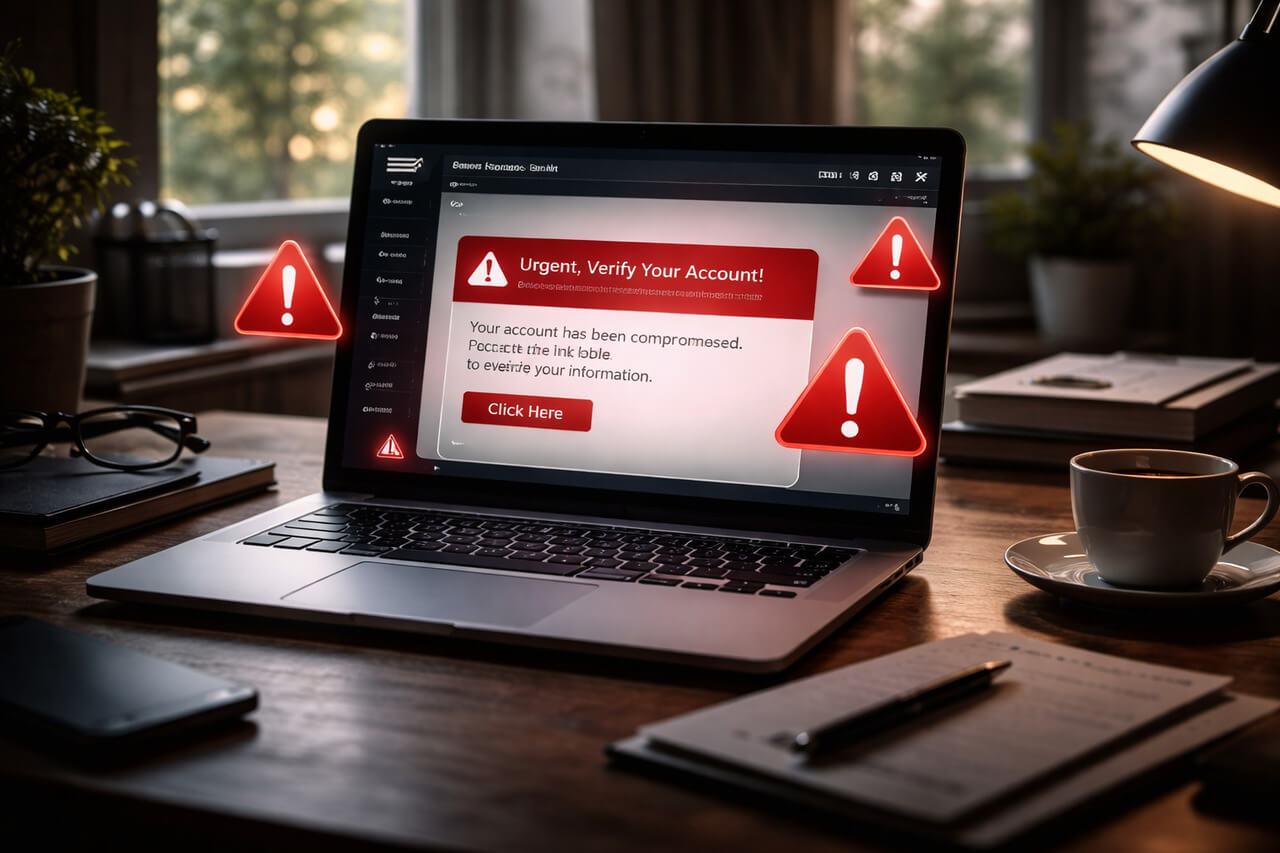
A clinical coordinator receives an email that a document was shared — a patient intake form in DocuSign, a referral document from another provider, or a file from your EHR system. The sender's name looks right. The formatting looks exactly like every other notification they see.
They click. They're prompted to log in. They enter their credentials. Now someone else has them — and with EHR credentials, an attacker potentially has access to your entire patient database, including protected health information (PHI) for every patient in your practice.
This type of threat has exploded. Phishing campaigns abusing trusted platforms like DocuSign and Microsoft increased 67% in 2025. Healthcare is the #1 ransomware target precisely because practices cannot afford EHR downtime — attackers know this and exploit it. A compromised credential can mean a federal HIPAA breach notification requirement and fines that reach into the hundreds of thousands.
The guardrail that helps: If a shared file wasn't expected, don't click the link — open the browser and log directly into the platform. Enable multi-factor authentication on Epic, Athenahealth, eClinicalWorks, or whatever EHR your practice uses. Boring habit. Critical result.
Scam #3: The Email That's Written Too Well
Remember when phishing emails were easy to spot? Those days are over. A 2025 study found that AI-generated phishing emails achieved a 54% click rate, compared to just 12% for human-written ones. These emails reference real practice names, real provider names, real workflows — scraped from your website and public directories in seconds.
For medical practices, the most dangerous variant is the fake insurance authorization or billing request. Your billing and front desk staff receive these constantly — so a convincing fake one blends right in. In one recent test, 72% of employees engaged with a vendor impersonation email. For medical practices where billing staff are processing insurance authorizations all day, that's a significant exposure.
The guardrail that helps: Any request involving credentials, payment changes, or PHI access gets verified through a second channel — a phone call to a known number, a walk down the hall. Employees treat urgency in email as the warning sign. Real insurance companies and vendors don't need you to panic.
What This Means for Your Salt Lake City Medical Practice
All of these scams exploit the pace and pressure of a busy clinical environment. The real risk isn't a careless employee. It's a system that assumes everyone will always slow down during a full patient schedule.
HIPAA doesn't care how busy you were. A breach triggers federal reporting requirements, potential fines, and mandatory patient notification — regardless of the circumstances. The goal of a strong cybersecurity posture isn't just endpoint security and firewalls: it's process design that protects patient data even when your clinical staff is between appointments and moving fast.
If one rushed click could expose PHI, that's not a people problem. It's a process problem. And process problems are fixable.
Frequently Asked Questions
What cybersecurity threats are medical practices in Salt Lake City most vulnerable to?
Healthcare is the #1 ransomware target nationally. Salt Lake City medical practices face the same active threats: smishing (fake toll or payment texts), phishing through trusted platforms like DocuSign and EHR patient portals, and AI-generated emails impersonating insurance companies, billing vendors, or referring providers. All three exploit the pace of clinical work.
How can medical practices meet HIPAA cybersecurity requirements and protect PHI?
HIPAA's Security Rule requires covered entities to implement administrative, physical, and technical safeguards. Practically, that means multi-factor authentication on all EHR and practice management systems, employee security awareness training, documented incident response procedures, and regular risk assessments. A HIPAA-compliant IT services provider can help you build and document all of these.
Does Qualit offer HIPAA-compliant IT services for medical practices in Salt Lake City?
Yes. Qualit provides cybersecurity and managed IT services for medical practices across Salt Lake City and the greater Utah area, including HIPAA-compliant endpoint protection, EHR security, and phishing defense. A quick discovery call is a good place to start.
That's Where We Can Help
Most Salt Lake City practice owners don't want to become HIPAA IT compliance experts or teach their front desk team what not to click. They want to focus on patients and know their practice is protected.
If you're a Utah medical practice owner concerned about what your team might be up against — or you know another provider who should be — we're happy to have a conversation. We'll cover:
- The cybersecurity risks Salt Lake City medical practices like yours are seeing right now
- Where PHI exposure tends to sneak in through normal clinical workflows
- Practical ways to reduce risk without slowing your clinical staff down
No pressure. No scare tactics. Just a practical conversation about protecting your patients and your practice.
We're a local cybersecurity and managed IT services provider helping Salt Lake City medical practices maintain HIPAA compliance and reduce IT risk.
Book your free discovery call here.
If this isn't for you, feel free to forward it to another provider who'd appreciate the heads-up.