
October 2026 | IT Security Salt Lake City | Security Culture | Employee Awareness
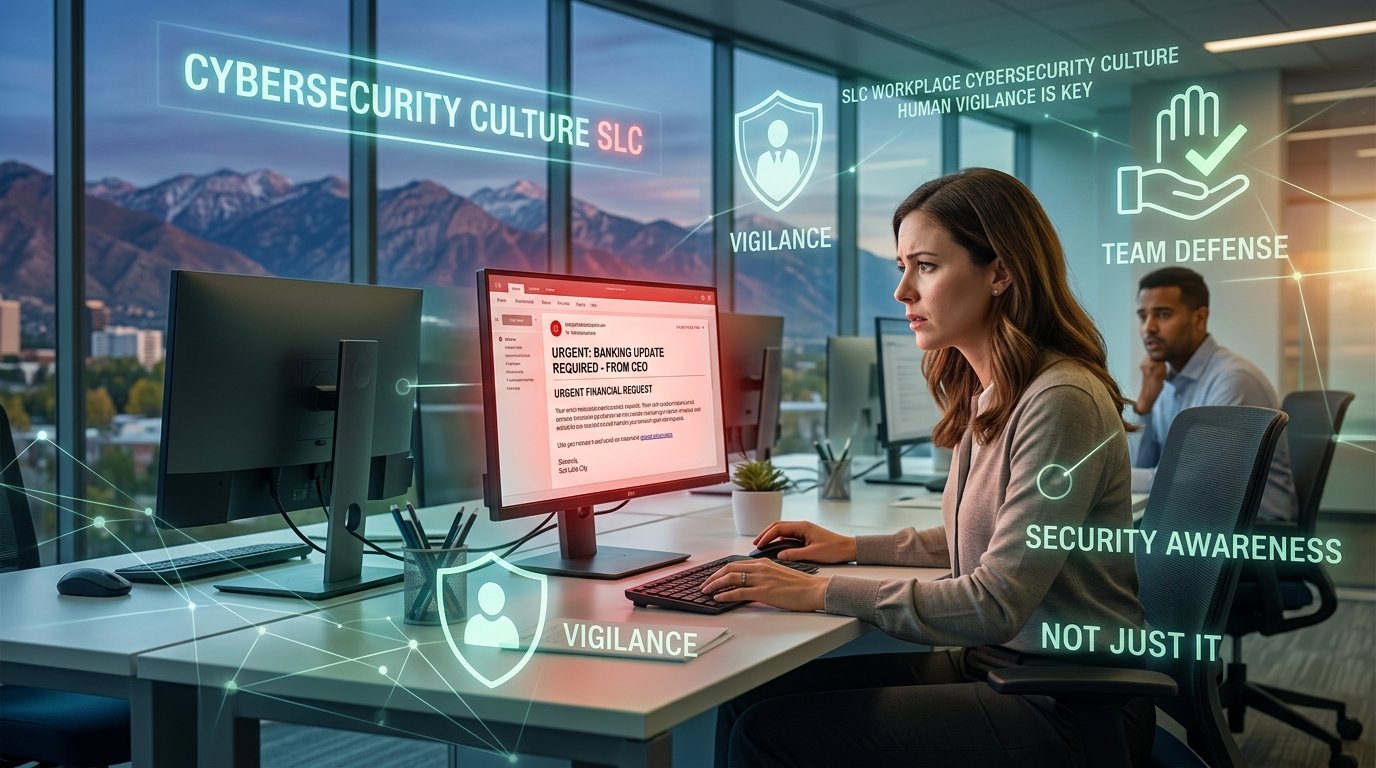
It's 4:17 on a Friday afternoon at a Salt Lake City business.
An employee receives an email that appears to be from the owner: "Can you send me the updated banking information before you leave?"
The name is right. The tone sounds familiar. And with everyone trying to wrap up the week, the easiest thing to do is simply respond. There's only one problem: the owner never sent it.
Your IT security tools can put strong protections in place, but they can't stop every bad click, rushed reply or split-second call. Some decisions still come down to whether an employee knows what to do when something feels off.
The Assumption That Leaves Businesses Exposed
Most business owners believe cybersecurity lives somewhere behind the scenes. The IT team has tools. The computers have protection. Someone schedules the updates. Cybersecurity is "handled."
In reality, your defenses are tested every time an employee decides whether to trust an email, link or request. Those decisions happen every day, across every part of your company. To truly strengthen your IT security, employees must know what to do when something doesn't look right.
Technology Can't Make Every Call
Good security tools block a lot of attack attempts before employees ever see them. But no technology can eliminate every questionable request or make every decision on an employee's behalf.
Today's phishing attacks aren't obvious. They're built to mimic familiar writing styles, reference vendors you know and mirror the rhythm of normal business conversations. When an unusual payment request comes from the CEO, a vendor legitimately changes banking details mid-project, or a team member needs access to a document they've never opened before — someone must decide what happens next. The employee at the keyboard has to determine in an instant whether they're looking at a scam or an authentic request.
"Be Careful" Isn't a Cybersecurity Plan
Most businesses tell employees to watch out for suspicious emails. But what should they do when they find one? Every employee should know:
- Who to contact
- How to verify a request is legitimate
- Not to click links or download attachments from suspicious messages
- What to do if they already clicked a link or downloaded an attachment
- How to report the issue
Telling everyone to simply "be careful" without a clear next step puts the full weight of a high-stakes decision on the person least equipped to handle it in the moment.
Assuming employees know what to do is a liability. An employee who isn't sure whether they're bothering someone may stay quiet. Someone who fears getting blamed for clicking the wrong thing may wait before reporting it. Hesitation is costly — the time lost while someone decides whether to speak up can turn a manageable incident into a much bigger problem.
Leadership Sets the Tone
Responsibility starts at the top, because employees take their cues from leadership. If the owner routinely skips verification steps because they're in a hurry, employees learn that speed matters more than process. If managers make it uncomfortable to flag suspicious activity, employees stay quiet. If someone clicks something they shouldn't and gets publicly reprimanded, everyone learns to hide their mistakes.
Fortunately, the opposite is also true. When leadership normalizes verification, employees take it seriously. When an employee who questions an unusual request is backed up rather than brushed off, the whole team operates more carefully. When employees trust leadership, they speak up before a situation becomes a crisis.
Cybersecurity Works Better When Everyone Knows Their Role
Back to that employee at 4:17 on a Friday afternoon.
The goal isn't to make them paranoid about every email they receive. It's to make sure that when something feels off, they know exactly what to do, who to ask and how to verify. Speaking up should always feel like the right move.
Your employees don't need to become cybersecurity experts to help protect your business. They need clear expectations, good habits and the confidence to flag when something doesn't look right.
Creating that kind of security culture takes more than an annual training session. It requires the right safeguards, practical processes and ongoing guidance to keep your business prepared as threats change.
Frequently Asked Questions
What is employee security awareness training?
It's structured, ongoing education that teaches employees to recognize phishing, social engineering and other threats — and gives them a clear process for verifying and reporting suspicious activity. Done well, it turns your team into an active layer of defense.
How does an IT security partner help build a security culture?
A partner like Qual IT identifies your gaps, implements the right safeguards, sets up practical verification and reporting processes, and provides the ongoing training and guidance that keeps security habits current as threats evolve.
Do you provide IT security services for businesses in Salt Lake City?
Yes. Qual IT delivers IT security services across Salt Lake City and the Wasatch Front, including email security, phishing protection, employee training and incident response planning.
You Don't Have to Manage It Alone
That's where the right IT partner comes in. Qual IT helps businesses take the guesswork out of cybersecurity by identifying gaps, strengthening protections and helping employees understand the role they play in keeping the business secure.
Cybersecurity is everyone's responsibility — but you don't have to manage it alone. Schedule a 10-minute discovery call with Qual IT to find the gaps in your current approach and how to address them. Book your discovery call here.