
July 2026 | Real Estate IT Services Utah | Property Management Cybersecurity Salt Lake City | Managed IT Services
Not all security failures start with a dramatic breach — but they all start with assumptions.
A Salt Lake City property management company can have AppFolio configured, backups scheduled, and antivirus installed — and still have no clear picture of whether any of it is actually working. But when a tenant data breach happens, or wire fraud hits a transaction, or a cybersecurity insurer asks for documentation at renewal, assumptions aren't enough. You need to know what's in place, what's monitored, and what needs attention.
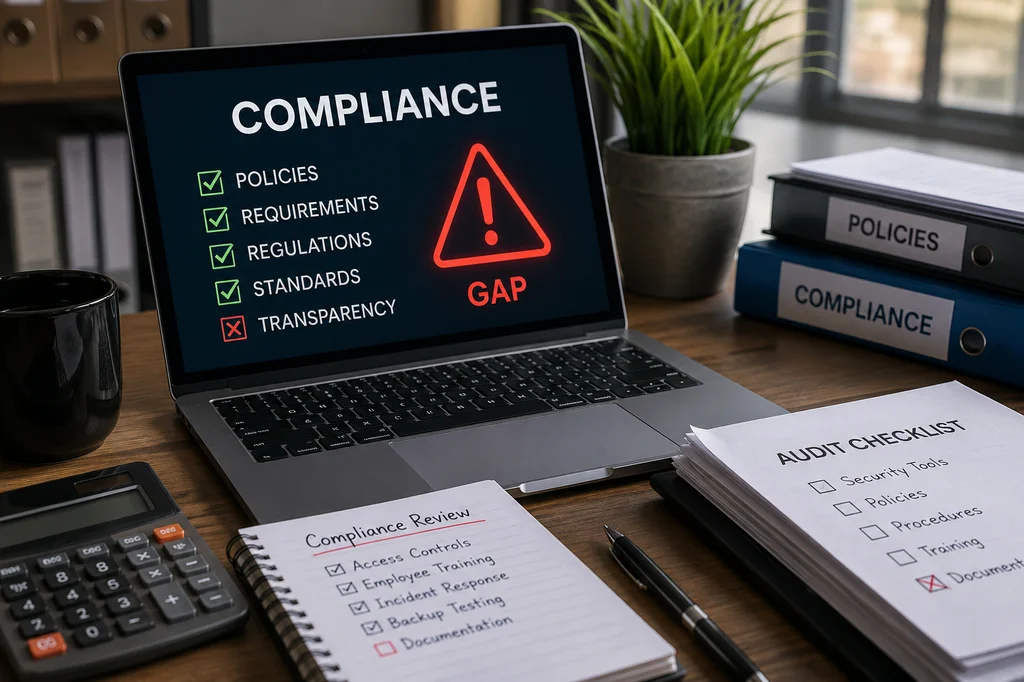
Unfortunately, most property management companies don't discover their IT security gaps during normal operations. They discover them under pressure — when a leasing agent's credentials get phished, when a wire transfer goes to the wrong account, when an auditor asks for proof of security controls and the documentation doesn't exist. Here are four compliance and security gaps that cost property management companies thousands when left unchecked.
Gap 1: Unmonitored AppFolio Security Settings and ACH Payment Controls
Most Salt Lake Valley property management companies already pay for security tools: endpoint protection for leasing agent devices, multifactor authentication on AppFolio and Buildium, email security filtering, and maybe a firewall at the office. On paper, the company looks covered. The problem is monitoring.
Who confirms that MFA is actually enabled for every leasing agent accessing AppFolio from a personal device? Who reviews login activity for unusual access patterns — a property manager logging in from an unfamiliar location, or credentials being used at 2am? Who checks that ACH payment settings in AppFolio haven't been quietly modified? Who reviews email security alerts when a lookalike domain mimicking your company is registered?
Security software can't protect what it doesn't see. It can't respond to alerts nobody reads. It can't catch the moment a criminal tests stolen credentials against your Buildium login. Buying the tool is step one. The protection comes from how that tool gets managed, monitored, and maintained month after month — especially as your property managers and leasing agents change, as new properties get added, and as new software joins your stack.
From a distance, your IT security looks solid. Under closer scrutiny — during a cybersecurity insurance audit or after a wire fraud incident — the picture often changes. Proof of active monitoring earns trust and keeps your coverage in place. A checkbox answer doesn't.
Gap 2: Leasing Agent Behavior Around Tenant SSNs and Bank Information
Your leasing agents aren't trying to create security risk — they're trying to process applications quickly, collect rent efficiently, and keep tenants happy. That's exactly why many property management security gaps come from routine behavior: emailing tenant SSNs to a property owner who asked for them, texting a screenshot of an ACH authorization form, storing rental application PDFs in a personal Google Drive, or using the same password for AppFolio that they use for personal accounts.
Tenant rental applications contain some of the most sensitive personal data that passes through your company: Social Security numbers, bank account and routing numbers for ACH rent collection, income documentation, and credit history. How your leasing agents handle that data — not just how your software stores it — is where the real exposure lives.
For Salt Lake City property management companies processing dozens of tenant applications and handling ACH payments across a portfolio, unreviewed leasing agent behavior around tenant PII is one of the most common sources of security risk. Employees need clear expectations, practical guidance, and systems that make secure behavior easy — not just a policy they read once during onboarding.
A security gap in tenant data handling doesn't have to involve a dramatic breach to be costly. A single complaint from a tenant whose SSN was mishandled, or a cybersecurity insurer who discovers leasing agents are emailing sensitive documents in plain text, can trigger real consequences.
Gap 3: Documentation Gaps That Surface When Someone Asks for Proof
Your property management company may be doing everything right operationally — access reviews, backup testing, vendor management, incident response. But if the evidence is scattered, incomplete, or missing, that becomes a problem the moment a cybersecurity insurer, a large institutional client, or a regulator asks for documentation.
Scrambling to build documentation after someone asks creates mistakes and makes your company look less prepared than it may actually be. It also raises questions about whether proper controls were being followed in the first place — a problem during an insurance claim after a wire fraud incident, when you need the insurer to trust your account of events.
Strong IT security compliance for property management companies means:
- Access reviews for AppFolio, Buildium, and Dotloop are documented before audits — not after
- Backup testing for tenant records and lease documents is logged with dates and results
- Vendor access records for maintenance contractors and HOA portals are maintained proactively
- Incident response plans for wire fraud attempts and data breaches are written before incidents happen
- Employee security training for leasing agents is tracked and current
Documentation needs to be current, clear, and easy to produce on demand — whether it's for an insurance renewal, a new institutional property owner, or an unexpected inquiry.
Gap 4: Security That Hasn't Kept Pace With Portfolio Growth and New Staff
This gap matters especially during a midyear review, because your Salt Lake City property management company may have grown significantly more than your security posture has in the first half of this year.
Maybe you added five new properties and brought on three new leasing agents to manage them. Maybe you signed with a new maintenance vendor who now has access to Propertyware. Maybe you started using Authentisign for transaction closings or added a Dotloop integration you hadn't used before. Maybe you expanded to a new market and brought on remote leasing staff who are accessing AppFolio from personal devices on home networks.
A security setup built for a 50-unit portfolio may not be adequate for 300 units across multiple properties. Access controls that were appropriate when every leasing agent worked in the office may be too loose now that the team is distributed and mobile. Backup coverage that worked for a simpler software stack may not extend to the new platforms you've added.
That's how property management companies outgrow their protection — not through negligence, but through growth that security didn't keep pace with. Every new property, every new leasing agent, every new vendor integration is a potential new exposure that needs to be assessed. A midyear IT security review helps confirm whether your current controls align with how the business actually operates today.
The Real Cost of Finding Out Late
Security and compliance gaps in property management almost always surface at the worst possible time: during a wire fraud incident, when a tenant data breach forces notifications, when a cybersecurity insurer reviews a claim and finds missing documentation, or when a large property owner asks for proof of your security controls before renewing a management contract.
At that point, you're doing damage control — not closing gaps. The time to identify these issues is before someone else asks the hard questions. A focused IT security review for your Salt Lake City property management company can surface where you're exposed, where access has accumulated, whether tenant PII is being handled correctly, and whether your current cybersecurity posture can withstand the scrutiny it will eventually face.
Frequently Asked Questions
Do you offer IT support and cybersecurity for property management companies in Salt Lake City?
Yes. Qual IT works with Salt Lake City property management companies to protect tenant data, secure real estate transactions, monitor AppFolio and Buildium security settings, and build the documentation that supports cybersecurity insurance and client requirements. We understand the specific risks your industry faces — wire fraud, tenant PII handling, and the security challenges of a growing, mobile leasing team.
What are the most common IT security gaps for Salt Lake City property management companies?
The most common gaps include unmonitored AppFolio and Buildium security settings, leasing agent behavior around tenant SSNs and ACH banking information, missing documentation for security controls and vendor access, and security setups that haven't kept pace with portfolio growth and new staff. A proactive managed IT services review can identify all of these before they become costly.
How does IT security affect cybersecurity insurance for property management companies in Utah?
Cybersecurity insurers increasingly require documented evidence of active controls — not just installed tools. Property management companies without proof of monitoring, access reviews, backup testing, and employee training may face higher premiums, claim denials after a wire fraud incident, or coverage gaps at renewal.
How often should Salt Lake City property management companies review their IT security posture?
At minimum, annually — but a midyear check-in is strongly recommended, especially after portfolio growth, new software additions, new vendor relationships, or leasing team changes. Quarterly reviews are ideal, particularly for property management companies managing high-value transactions or large volumes of tenant data.
Close the Gaps Before They Cost You
We work with Salt Lake City property management companies to protect tenant data and secure real estate transactions.
Schedule your free discovery call today — Qual IT helps Salt Lake City property management companies identify IT security blind spots, strengthen controls around tenant data and wire fraud prevention, and confirm that today's security setup can handle today's portfolio — and tomorrow's growth.