
Cybersecurity | Salt Lake City Financial Advisors | SEC-Compliant IT
School's out, which means for many Salt Lake City financial advisors the workday doesn't look quite the same as it did a few weeks ago.
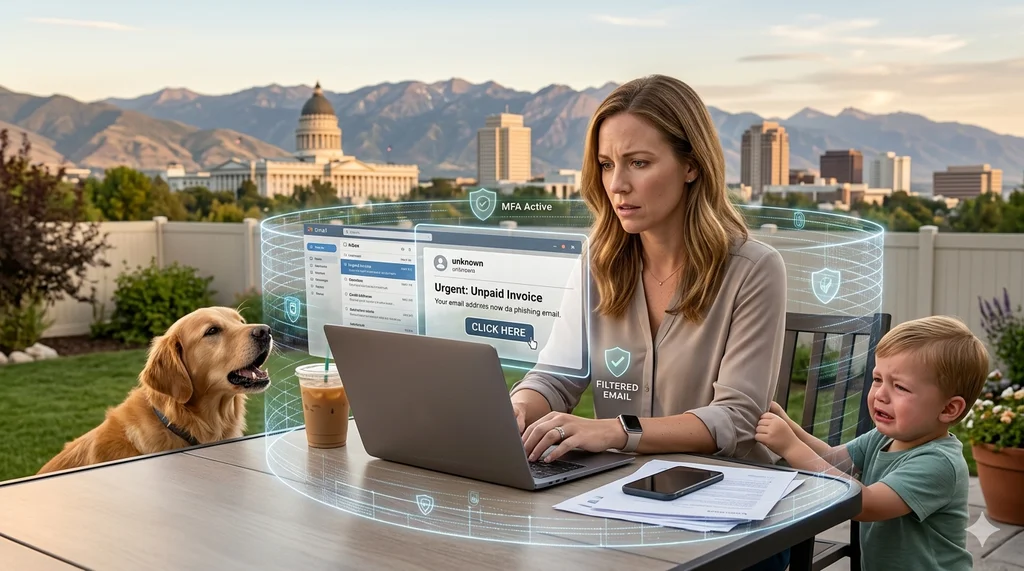
Maybe you're starting earlier to wrap up before an afternoon commitment. Maybe you're working from home more, fielding calls between school pickups, with fewer stretches of uninterrupted time to review client portfolios or respond to compliance requests.
Either way, you're adjusting to the new rhythm — and cybercriminals are adjusting right along with you. For RIAs and wealth management firms, where fiduciary duty requires protecting sensitive client financial data, that's a compliance risk as much as a security one.
This Isn't Your Normal Workday
Hackers know the summer schedule shift, and they plan around it. When your advisory day is fragmented, all it takes is one well-timed moment.
Not a major lapse. Just a quick decision made while your attention is somewhere else.
Summer creates more of those moments because routines are less consistent and distractions are higher. For Salt Lake City financial advisors, client service happens in between everything else. And when that's the case, speed tends to win over scrutiny.
That's where the real cybersecurity risk starts — and where SEC and FINRA cybersecurity requirements become critical guardrails rather than checkbox items.
Cybercriminals don't rely on big, obvious scams. They send messages that look routine — a wire transfer request, a shared client document in ShareFile, a quick DocuSign link — designed to catch you in the middle of something else. Not when you're focused. When you're busy.
In that moment, it's easy to move quickly instead of looking closely. That's when the click happens.
The Click Isn't the Problem — It's What That Click Has Access To
When an advisor or staff member clicks a phishing link or downloads a malicious attachment, it doesn't stop there. It opens the door to email accounts, client records in Redtail or Wealthbox, portfolio data in Orion or Black Diamond, and the financial planning systems your Salt Lake City firm relies on every day.
None of these operate in isolation, so once access is gained, it rarely stays contained.
From there, an attacker can move quietly through your environment — accessing client account information, intercepting wire transfer instructions, or extracting financial plans from eMoney before anyone realizes what's happening. By the time it's noticed, the impact is already much bigger than a single mistake.
At that point, the issue isn't just a bad click. It's a potential SEC breach notification, FINRA examination finding, and the violation of your fiduciary duty to protect client information.
Why 'Just Be More Careful' Doesn't Work
It's easy to say the solution is for advisors and staff to be more careful. But that assumes your advisory team has time to stop and evaluate every message.
They don't.
Advisory work moves quickly. Attention is split across client meetings, compliance deadlines, and portfolio reviews. People are juggling conversations, switching between Smarsh-archived emails and client portals, and moving quickly to keep service levels high. That's why the goal shouldn't be perfect attention. It should be building systems that don't rely on it.
What Actually Protects Your Advisory Firm
If your advisory team is moving fast, getting interrupted, and juggling more than usual this summer, your cybersecurity must account for that. The right guardrails help ensure a normal workday doesn't turn into a security incident — or a regulatory one.
That means limiting what a single mistake can affect and catching problems before they spread. In practice, putting guardrails in place looks like:
- Using unique passwords for every login so one compromised account doesn't unlock client portals, Orion, or your CRM
- Turning on multi-factor authentication so a password alone isn't enough to access client financial data
- Filtering and flagging suspicious emails before they reach your advisory team — including BEC attempts targeting wire transfers
- Making it easy for someone to pause and ask, "Does this look right?" — especially when a wire instruction or client document request feels off
None of this depends on perfect behavior. It's designed for real advisory workdays where people move quickly, get interrupted, and don't have time to second-guess every click.
What to Do Now While Things Still Feel 'Mostly Fine'
If someone on your advisory team makes the wrong click this afternoon, is it a small issue or something that spreads into client account data? Would you catch it right away, or only after it's already caused damage — and triggered mandatory breach reporting under SEC rules?
Summer doesn't create these risks. It just makes them easier to miss.
If your Salt Lake City RIA or wealth management firm still depends on everyone catching everything perfectly, it's time to take a closer look before the pace picks up again.
Frequently Asked Questions
Do you offer SEC and FINRA-compliant IT services for financial advisory firms in Salt Lake City?
Yes. Qual IT works with Salt Lake City financial advisors and RIAs to put the right security guardrails in place — from multi-factor authentication to email filtering and security awareness training aligned with SEC cybersecurity guidance. We help ensure one distracted moment doesn't turn into a regulatory problem.
What is phishing and why is it a bigger risk for financial advisors in summer?
Phishing is when attackers send messages that look routine — wire transfer requests, shared client documents, DocuSign links — designed to trick someone into clicking. Summer increases the risk for advisory firms because routines are disrupted, schedules are less predictable, and advisors and staff are more distracted, which is exactly the environment attackers plan around.
How quickly can Qual IT respond if something goes wrong at our advisory firm?
Our team monitors systems proactively, which means we often catch issues before they cause damage. When something does go wrong, we respond quickly so the impact stays small — and so you have the documentation needed for any required regulatory disclosure.
We work with Salt Lake City financial advisors to meet SEC/FINRA requirements and protect client data.
Let's make sure one mistake doesn't turn into a compliance problem for your advisory firm. Book a quick discovery call and we'll show you exactly where your firm stands.
And if you know another Salt Lake City advisor trying to balance client service while everything else is competing for attention this time of year, send this their way.