
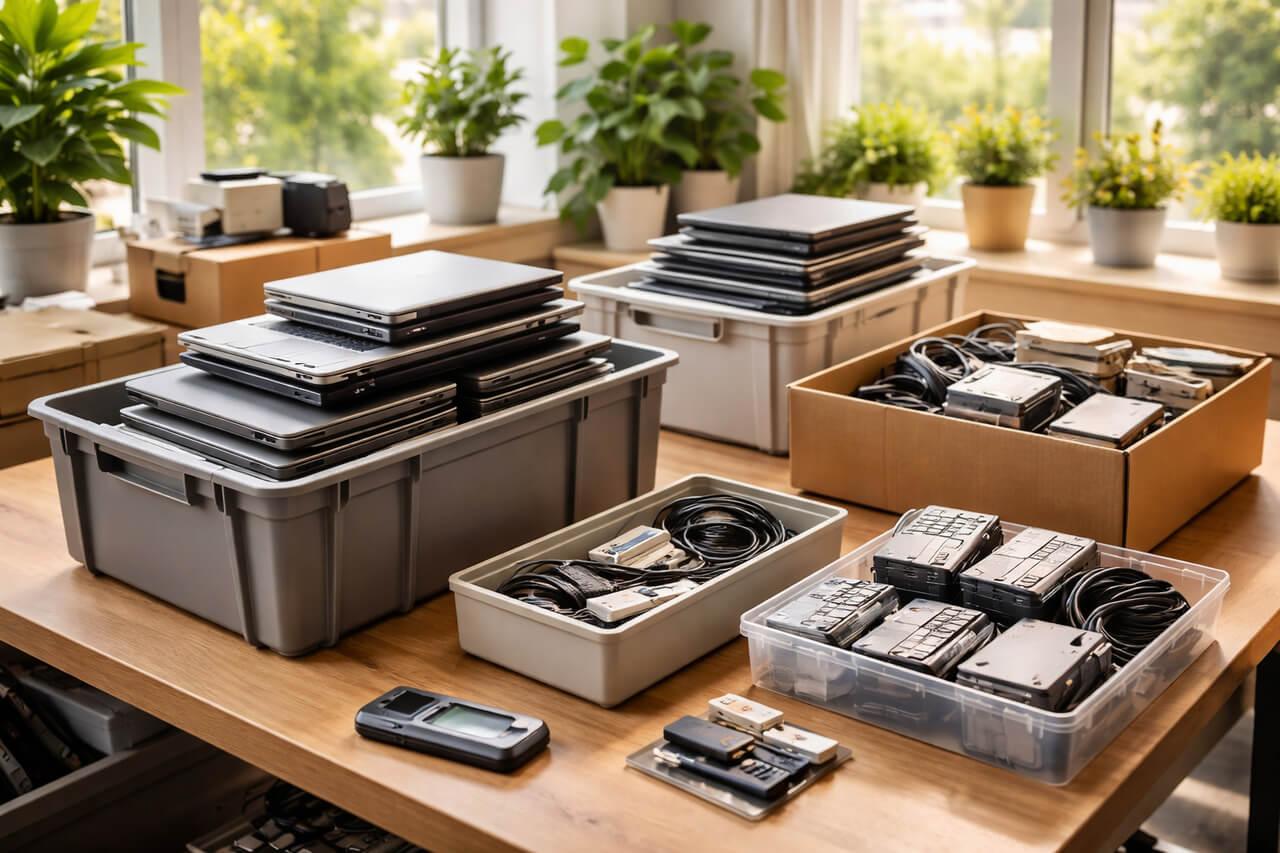
Spring cleaning usually starts with closets — but for most Salt Lake City property management companies, the real clutter isn't just on a shelf in the break room.
It might be in a storage cabinet. Or in a leasing agent's car. Or in a box labeled "old tablets — deal with later." Old laptops with tenant application data. Retired phones that still have AppFolio logins cached. Tablets from a former leasing office. Backup drives from three software upgrades ago.
Every property management firm accumulates this stuff — especially companies managing multiple properties across different Salt Lake City locations. The question isn't whether you have it. It's whether you have a plan for what happens next, and whether anyone has thought through what's still on those devices.
Technology Has a Lifecycle — Not Just a Purchase Date
When you buy new equipment, there's a clear reason: it's faster, more reliable, more capable.
Most property management companies plan how they buy technology. Few plan how they retire it.
When you retire a device, it often happens quietly. A leasing agent gets a new laptop. The old one gets set aside. Eventually someone decides to clear space. That's normal. What's less common is treating retirement with the same care as the purchase.
Old property management devices still have usable value, recyclable components, and — critically — stored access and data. For property management companies, that can mean tenant SSNs from rental applications, ACH banking information for rent collection, lease documents, owner financial records, and AppFolio or Buildium login credentials cached on a device that just went into a cardboard box.
A proactive hardware lifecycle plan — something a good IT provider helps you maintain — prevents old equipment from becoming a security liability or a compliance problem.
A Practical Four-Step Framework for Retiring IT Equipment
Step 1: Inventory
What are you actually retiring? Laptops, tablets, phones, printers, network gear, external drives? Property management companies often have devices spread across multiple locations. A quick walkthrough of each office — including back rooms and storage closets — often reveals more than expected.
Step 2: Decide the Destination
Every device typically falls into one of three categories: reuse (internally or through a nonprofit donation program), recycle (through certified e-waste channels), or destroy (when data sensitivity requires it). For property management firms handling tenant PII, the bar for "destroy" is higher than for most businesses. When in doubt, destroy.
Step 3: Prepare the Device Properly
This is where most property management companies fall short. A study by data security firm Blancco found that 42% of resold drives purchased on eBay still contained sensitive data — including personal tax records and financial information. Every seller claimed the drives had been properly wiped.
A factory reset does not fully remove data. A certified data erasure tool overwrites every sector and provides a verification report. That's the standard for any device that ever touched your tenant database, property management software, or owner financial records.
For commercial equipment in Utah, use a certified IT asset disposition (ITAD) provider with e-Stewards or R2 certification. Your IT provider can typically coordinate this. If the equipment is to be destroyed, use professional shredding or degaussing, and keep a written record: device serial number, method, date, and who handled it.
Step 4: Document and Move On
Once equipment leaves your building, you should know where it went, how the data was handled, and that all access credentials were revoked — including AppFolio, Buildium, Yardi, and any carrier or MLS portal accounts that were active on that device. Document everything.
The Devices Property Management Companies Tend to Forget
Leasing tablets usually get attention. These often don't:
- Phones used by former leasing agents — may still have AppFolio or Buildium mobile app access, plus email with tenant communications
- Printers and copiers with internal hard drives — stores copies of every lease, application, and financial document ever printed or scanned
- Older laptops in storage that were used during property transitions — may have full tenant records from previous management cycles
- External drives used for property photo storage or document backup — often contain years of lease records and financial data
Each of these deserves the same retirement process as a primary workstation. The data exposure risk is identical.
A Quick Word on Responsible Recycling
Electronics shouldn't end up in landfills. The world generates over 62 million metric tons of e-waste per year, and only about 22% gets properly recycled. Salt Lake City and the greater Utah area have certified e-waste options for businesses — handling disposal correctly is both operationally clean and the right thing to do for your community.
The Bigger Opportunity
Spring cleaning isn't about getting rid of things. It's about making space.
Clearing out outdated equipment is one piece of the picture. But while you're stepping back and looking at your hardware, it's worth asking a larger question: Is our technology actually keeping up with how we manage properties today?
For property management companies in Salt Lake City, that means mobile access that works reliably in the field, AppFolio and Yardi that sync without friction, tenant communication tools that don't drop the ball, and maintenance dispatch that moves without IT delays getting in the way.
Frequently Asked Questions
How often should Salt Lake City property management companies review and retire old IT equipment?
Most IT providers recommend a hardware lifecycle review every 12–18 months. For property management firms that use mobile devices extensively or manage multiple locations, a review at least annually makes sense — especially given the tenant PII stored on field devices. A managed IT services partner can help you build a proactive plan.
What data security risks apply specifically to property management companies retiring old equipment?
Property management devices frequently store tenant SSNs from rental applications, ACH banking details for rent collection, lease agreements, and owner financial records. Improperly retired devices carrying this data create significant breach liability. Certified data erasure — not factory reset — is the required standard before any device is reused, donated, or recycled.
Can a managed IT services provider handle hardware disposal for our property management company?
Yes. A good managed IT services partner handles the full hardware lifecycle — from procurement through secure disposal — and coordinates with certified ITAD providers on your behalf. Qualit provides managed IT services for property management companies throughout Salt Lake City and the greater Utah area.
Where We Come In
If you already have a clear, documented process for retiring equipment across all your properties and locations — great. That's exactly how this should feel.
But if the answer is "we just reset it and put it in a box," that's worth a conversation.
We'd love to help you step back and review how your tech lifecycle, field device management, and platform access controls are supporting your operation. No equipment checklist. No hard sell.
Schedule your discovery call here.
And if this sparked an idea for another property management professional in the Salt Lake City area, feel free to pass it along. Spring cleaning shouldn't stop at the leasing office.