
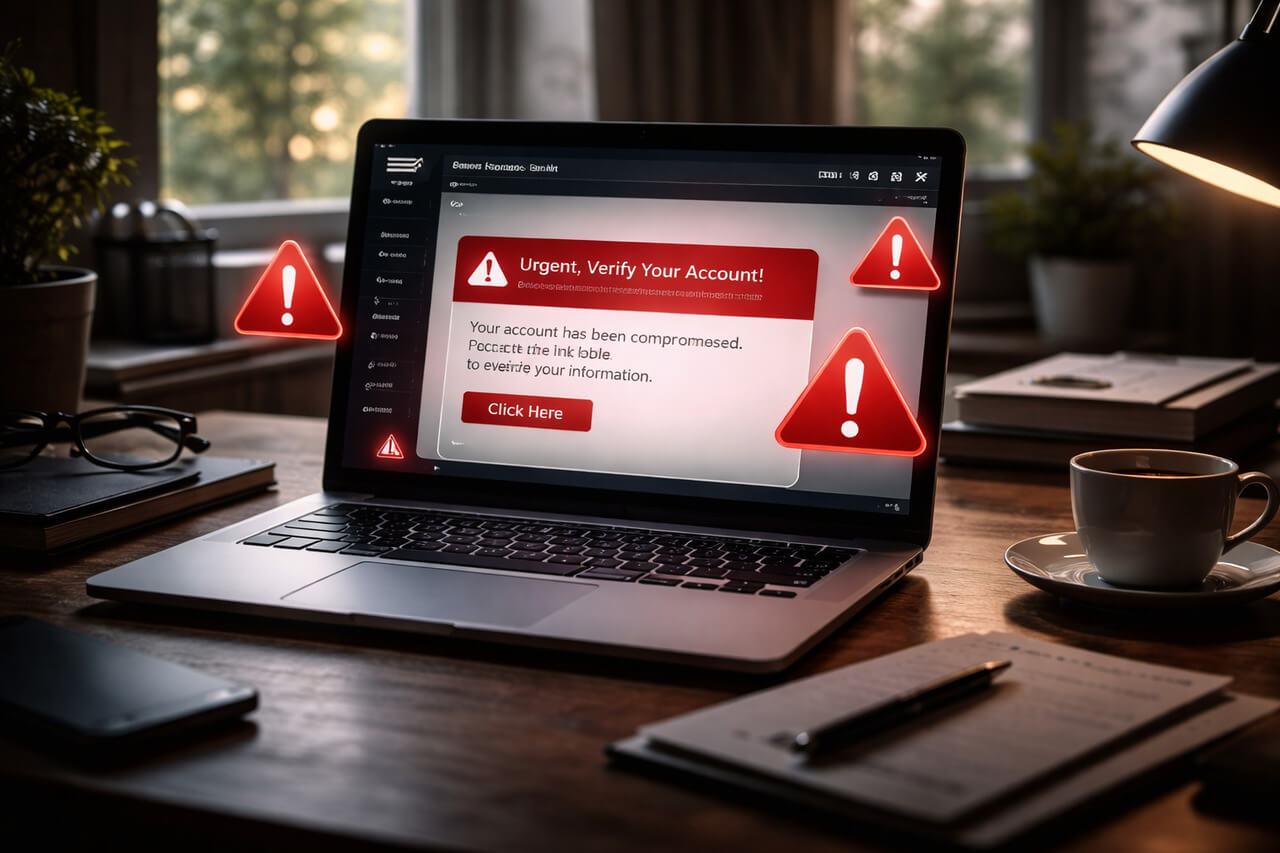
April 1 comes and goes. The pranks disappear. Unfortunately, the cybersecurity threats targeting Salt Lake City law firms don't disappear with them.
Spring is one of the most active seasons for cybercriminals — and Utah attorneys and legal professionals are a high-value target. Not because your legal team is careless, but because attorneys and staff are busy, moving between client matters, court deadlines, and document reviews. That's when the almost-believable scams slip through: the kind that blend into a normal day at the firm and don't feel dangerous until it's too late.
Here are three active cybersecurity threats hitting law firms right now. Not targeting gullible people, but sharp, detail-oriented legal professionals who are just trying to get through their caseload. As you read through these, ask yourself one honest question: Would everyone at your firm pause long enough to catch each one?
Scam #1: The Toll Road (or Parking Fee) Text
An attorney or paralegal gets a text between client calls: "You have an unpaid toll balance of $6.99. Pay within 12 hours to avoid late fees." The amount is small. They're between depositions, so they click, pay and move on. Except the link wasn't real.
The FBI received more than 60,000 complaints about fake toll texts in 2024 alone, and volume jumped 900% in 2025. The reason it works is simple: $6 doesn't feel risky, and most people have driven through a toll or parked downtown recently, so the message feels plausible.
The guardrail: Legitimate toll agencies don't demand immediate payment via text. No payments through text-message links. If something might be real, go directly to the official website. Never reply. Convenience is the bait. Process is the defense.
Scam #2: 'Your File Is Ready'
A staff member receives an email that a document was shared — a case document in NetDocuments, a client contract in SharePoint, or a file from what appears to be opposing counsel or a client. The formatting looks exactly like every other file-share notification they see. They click, enter their credentials, and now an attacker potentially has access to your firm's document management system and every confidential client file it contains.
Phishing campaigns abusing platforms like NetDocuments, SharePoint, and DocuSign increased 67% in 2025. For law firms, a compromised document management credential isn't just an IT problem — it's a potential attorney-client privilege violation and a state bar reporting matter.
The guardrail: If a shared file wasn't expected, don't click the link — log directly into the platform. Enable multi-factor authentication on all document management and practice management accounts. Boring habit. Critical result for client confidentiality.
Scam #3: The Email That Looks Like Opposing Counsel — or Your Client
Remember when phishing emails were easy to spot? Those days are over. A 2025 study found that AI-generated phishing emails achieved a 54% click rate, compared to just 12% for human-written ones. These emails reference real case names, real party names, real firm workflows — all scraped from court filings and public records in seconds.
For law firms, the most dangerous variant involves wire fraud. A fake email arrives appearing to be from a client, a title company, or opposing counsel, directing a wire transfer for a settlement, closing, or retainer. The email looks legitimate, references the right matter, and creates urgency. In one recent test, 72% of employees engaged with a vendor impersonation email. For law firms processing client trust funds and settlement payments, a single successful impersonation can be financially and professionally devastating.
The guardrail: Any request involving a wire transfer, credentials, or changes to payment instructions gets verified through a second channel — a phone call to a known number, not a number from the email. Attorneys and staff treat urgency in financial emails as the warning sign. Real clients and opposing counsel don't pressure you to move money without direct confirmation.
What This Means for Your Salt Lake City Law Firm
All of these scams exploit the pace and pressure of active legal practice. The real risk isn't a careless employee. It's a system that assumes everyone will always slow down and double-check in the middle of a busy caseload.
Attorney-client privilege extends to digital communications. A cybersecurity breach at a law firm isn't just a business problem — it's a potential bar association issue, a professional liability matter, and an obligation to notify affected clients. The goal of a strong cybersecurity posture isn't just technical controls: it's process design that protects client confidentiality even when your attorneys and staff are under pressure.
Frequently Asked Questions
What cybersecurity threats are most dangerous for Salt Lake City law firms?
Wire fraud targeting settlement payments and client trust funds is among the highest-risk threats for law firms. Document management platform phishing (fake NetDocuments, SharePoint, or iManage notifications) and AI-generated emails impersonating clients, opposing counsel, or court notices round out the top active threats. All exploit the pace and document volume of legal practice.
How do law firms protect client confidentiality from cybersecurity threats?
The most effective defenses combine technical controls and firm-wide policy. Multi-factor authentication on all practice management and document management systems, mandatory verbal verification for wire transfers, employee security awareness training specific to legal phishing patterns, and regular cybersecurity risk assessments are the foundation. State bar cybersecurity requirements are evolving — a qualified legal IT provider can help you document compliance.
Does Qualit offer cybersecurity services for law firms in Salt Lake City?
Yes. Qualit provides cybersecurity and managed IT services for law firms across Salt Lake City and the greater Utah area, including legal document platform security, endpoint protection, and proactive threat monitoring. A quick discovery call is a good place to start.
That's Where We Can Help
Most Salt Lake City managing partners don't want to become cybersecurity experts. They want to know their client files are protected, their trust accounts are secure, and their firm meets the bar's requirements.
If you're a Utah law firm concerned about what your attorneys and staff might be dealing with, we're happy to have a conversation. We'll cover:
- The cybersecurity risks Salt Lake City law firms are seeing right now
- Where client confidentiality and payment security risks tend to surface through normal legal workflows
- Practical ways to protect your firm and meet bar association IT requirements without disrupting your practice
No pressure. No scare tactics. Just a practical conversation about protecting your clients and your firm.