
September 2026 | IT Support for Dental Offices Salt Lake City | Productivity & Efficiency | Proactive IT
If you run a dental practice, you're always looking for ways to save time — because in your world, the schedule is the revenue. Every minute your front desk and dental team spend fighting a slow workstation or hunting for information is a minute that isn't going to patient care.
New software, AI tools and productivity systems all promise to help. But the Salt Lake City dental practices that run with the fewest interruptions usually have one thing in common: better habits — often reinforced by the right IT support for dental offices in Salt Lake City working behind the scenes.
The biggest time-savers aren't the ones getting the most attention. They're the routines that prevent small problems from becoming lost chair time. As the year-end benefits rush approaches, it's a good time to revisit five habits that keep practices productive, reduce friction and avoid unnecessary fire drills.
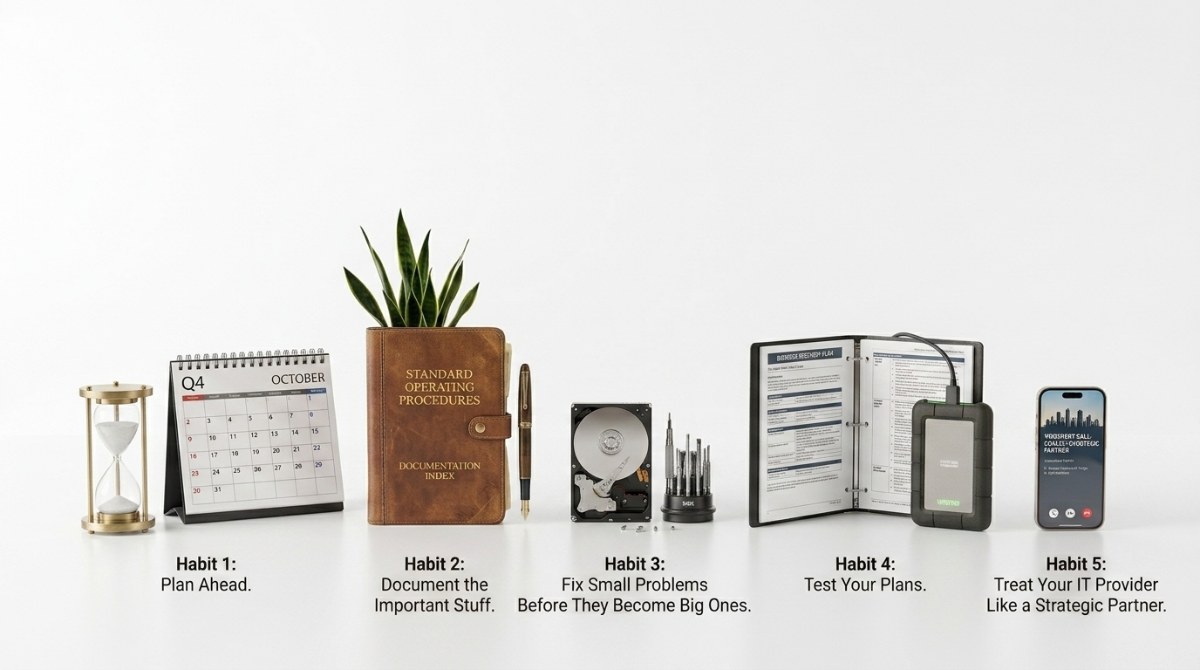
Habit 1: Plan Ahead Instead of Playing Catch-Up
If you wait until the end of the quarter to evaluate what's working, you're already playing catch-up.
Well-run practices set aside time — even a few minutes in the morning huddle — to review priorities, discuss potential roadblocks and prepare for what's next. Those conversations don't need to be long, but they do need to happen consistently.
When you make planning a habit, you're less likely to spend time reacting to surprises and more likely to stay focused on your patients. A little planning today prevents a lot of scrambling tomorrow — especially heading into the busiest scheduling season of the year.
Habit 2: Document the Important Stuff
If your practice depends on one person remembering how something works, you've created a single point of failure — and in most dental offices, that person is the office manager or a veteran front desk team member.
Insurance verification steps, end-of-day closeout in Dentrix or Eaglesoft, recall workflows in Weave or Lighthouse 360, vendor contacts, how to reboot the imaging server — these should be easy to find, understand and share. Good documentation keeps the schedule moving when someone is out sick or on vacation, and reduces the time your team spends searching for answers.
When information lives in one person's head, the front desk slows down. When it's documented, your team moves forward with confidence. The less your team has to guess, the more time they spend keeping chairs full.
Habit 3: Fix Small Problems Before They Become Big Ones
Your practice probably has a list of minor frustrations people have learned to work around.
Maybe it's the operatory workstation that takes two minutes to pull up Dexis images while the patient waits in the chair. Maybe it's an outdated version of your practice management software, or the front desk computer that freezes during checkout. Because those issues aren't urgent, they get pushed aside.
The most efficient practices take a different approach. They address small problems while they're still manageable, rather than waiting until they cause larger disruptions. This is exactly what proactive IT support is built for — catching the failing hard drive on the server that holds your X-ray archive, the unpatched software, the aging network switch before it costs your practice a day of appointments.
Small issues may seem harmless, but they rarely stay that way.
Habit 4: Test Your Plans Instead of Making Assumptions
It's easy to make assumptions when everything seems to be working.
"Our patient records are backed up."
"The team knows what to do if the system goes down."
"We'll figure it out."
Resilient practices replace assumptions with confidence. They actually test restoring patient records and imaging from backup, review recovery plans and walk through scenarios — like a morning where the practice management system won't open — before they're forced to live one. A backup of your X-ray archive that has never been test-restored is a hope, not a plan.
September is National Preparedness Month — a good reminder that preparedness isn't only for families and communities. It's a smart practice habit, too. The time you spend preparing for a disruption is usually far less than the chair time you'd lose recovering from one.
Habit 5: Treat Your IT Provider Like a Strategic Partner
If the only time you talk to your IT provider is when something breaks, you're missing opportunities to prevent problems in the first place.
The most successful practices have regular conversations about goals, risks, upcoming equipment purchases and priorities. That allows technology decisions — a new imaging sensor, a practice management upgrade, a HIPAA security review — to support growth instead of reacting to problems after they happen.
A strong IT partner who understands dental office cybersecurity in Salt Lake City reinforces the habits that keep your practice running efficiently — offering guidance, planning and support long before an issue turns into an interruption. The best technology relationships prevent problems, not just solve them.
Frequently Asked Questions
Do you offer HIPAA-compliant IT services for dental offices in Salt Lake City?
Yes. Qual IT provides HIPAA IT support for dentists in Salt Lake City, including secure and encrypted backups of patient records and imaging, network security, access controls and documentation that supports compliance.
How does proactive IT support save dental practices time?
Proactive IT support catches issues before they cause downtime: patching software, monitoring the health of servers and imaging workstations, verifying backups and closing security gaps. Instead of losing chair time to unexpected failures, your front desk and dental team stay focused on patients.
How quickly can Qual IT respond to issues in Salt Lake City?
As a local Salt Lake City IT support company, Qual IT provides responsive help desk support and proactive monitoring designed to resolve most issues before they interrupt your schedule.
Small Habits Make a Big Difference
The practices that save the most time consistently build habits that reduce friction, improve visibility and keep the schedule moving.
As you prepare for the year-end rush, ask yourself which of these habits your practice is already doing well — and which ones deserve more attention before the schedule fills up.
We work with Salt Lake City dental practices to keep systems running and patient data secure.
If building a healthy, resilient technology strategy is on that list, schedule a 10-minute discovery call with Qual IT. We'll help you identify opportunities for improvement and make sure your practice is ready for whatever the rest of the year brings. Book your discovery call here.