
IT Support for Engineering Firms Salt Lake City | Engineering Firm Cybersecurity Utah | Managed IT
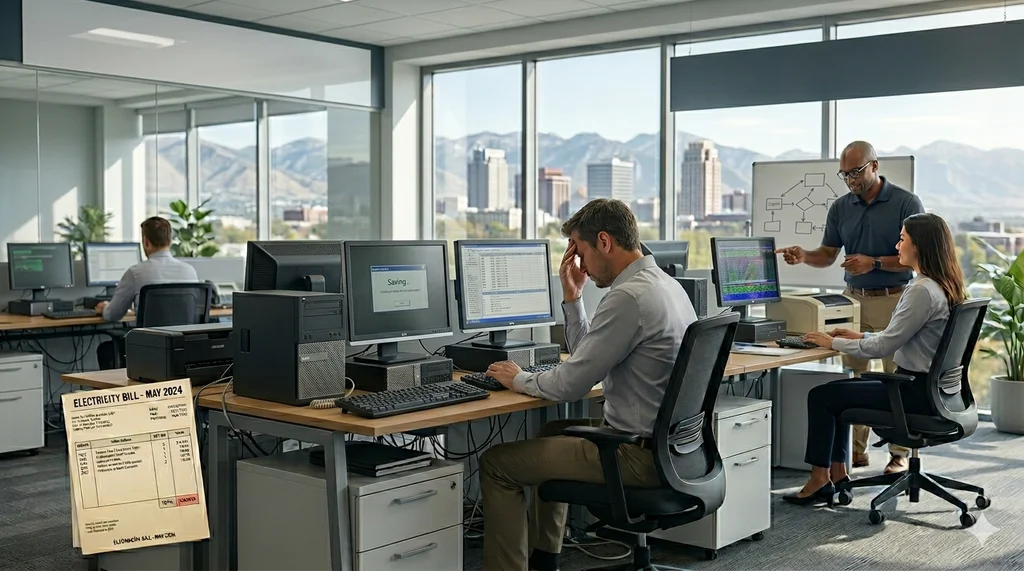
Most engineering firms treat aging workstations like outdated reference standards — clearly past their prime, but not obviously broken enough to trigger a replacement cycle.
You notice the performance degradation here and there: the AutoCAD Civil 3D model takes longer to regenerate than it used to, the ANSYS simulation that used to run overnight now runs through the weekend, or the SolidWorks assembly freezes mid-session and everyone on the project team knows to save frequently.
It's frustrating, but it doesn't feel like a crisis. Your engineering team adapts, works around it, and the aging hardware keeps grinding along — while quietly costing your Salt Lake City firm more than the replacement cost would.
At Some Point, Legacy Infrastructure Costs More Than It's Worth
Holding onto older workstations and servers can feel like the analytically sound choice. If it's still producing deliverables, why replace it?
The problem is that aging engineering IT infrastructure doesn't just sit there consuming a fixed cost. Over time, it generates costs in ways that don't appear on any single line item.
Energy consumption increases because older workstations work harder just to execute the same computational tasks. High-performance engineering software like ANSYS, SolidWorks, and Bentley MicroStation is optimized for modern hardware — running it on aging systems means the hardware is drawing more power and generating more heat just to keep pace. During the Utah summer, that thermal load compounds. Modern workstations built for HPC workflows use significantly less power while delivering substantially more computational throughput.
Then there's the time cost. Simulation runs that should complete in hours take days. AutoCAD Civil 3D file operations that used to be instant introduce noticeable lag. These delays accumulate across every project, every day, stretching billable work into unbillable waiting.
On top of that, technical interruptions become routine. Workstations freeze mid-session, Newforma sync operations time out, and rebooting becomes a standard step in the project workflow rather than an exception. Each interruption might take only a few minutes, but it breaks the focused technical state that engineering design work requires — and reconstructing that focus takes far longer than the interruption itself.
When you assess this trifecta systematically — increased energy costs, lost billable time, and constant workflow interruptions — the "cost savings" of deferring hardware replacement rarely survive the analysis.
What It Looks Like When You Stop Paying for Underperforming Infrastructure
Once aging systems are replaced where the analysis supports it, the performance difference is measurable immediately:
- AutoCAD Civil 3D, ANSYS, and SolidWorks operate at their designed performance thresholds — simulations complete on schedule
- Workstation-related interruptions stop being a variable in project scheduling
- Your engineering team spends their time on technical work instead of waiting on hardware
- Energy consumption drops as modern, efficient workstations replace aging high-heat systems
- The ongoing costs tied to performance degradation and unplanned downtime begin to come down
Project days run more predictably, your team maintains technical focus, and you're no longer absorbing the hidden cost of infrastructure that can't keep pace with modern engineering software.
Is It Time for a Hardware Assessment?
If your workstations are slow, if engineers have adapted their workflows around hardware limitations, or if simulation jobs are taking longer than the project schedule allows — you're already paying the cost. The only question is how much longer you want to absorb it.
This doesn't resolve on its own. It compounds through lost billable time, increased energy costs, and workflow interruptions that gradually become normalized.
That's where Qual IT comes in.
As your Salt Lake City IT partner for engineering firms, we don't just fix issues — we help you build a defensible case for what to replace and when:
- We assess which workstations and servers are generating costs that exceed their replacement value
- We help you determine what should be replaced now versus what can wait based on actual performance data
- We recommend right-sized hardware configurations for AutoCAD Civil 3D, ANSYS, SolidWorks, and other technical workloads — not overspecified systems that exceed your requirements
- We manage the transition so your project team experiences minimal disruption
- We maintain everything going forward so your firm doesn't find itself in the same position again in three years
Instead of deferring decisions based on incomplete information, you'll have a clear infrastructure plan and systems that actually support your engineering workflows.
Frequently Asked Questions
Do you offer IT support for engineering firms and technical consultancies in Salt Lake City?
Yes. Qual IT works with civil, structural, mechanical, and specialty engineering firms across Salt Lake City and the greater Salt Lake Valley. We assess your current IT infrastructure, identify what's generating hidden costs, and build a practical hardware lifecycle plan — with no unnecessary purchases.
How do I know if my engineering firm's workstations are outdated?
Common indicators include: simulation runtimes that have increased without corresponding model complexity growth, AutoCAD Civil 3D or Bentley MicroStation performance degradation, frequent freeze-and-restart cycles, hardware or software that vendors no longer support with security patches, and workstations that engineers work around as a standard practice. If any of these apply, a Qual IT infrastructure assessment can quantify what it's actually costing you.
What is included in managed IT services for Salt Lake City engineering firms?
Our managed IT services for engineering firms include ongoing system monitoring, workstation and server maintenance, help desk support, patch management for engineering software platforms, hardware lifecycle planning, and strategic IT guidance. We take responsibility for the technical infrastructure so your project staff can focus on engineering deliverables — not IT troubleshooting.
We work with Salt Lake City engineering firms to protect project data and support technical workflows.
We'll show you what's been costing your firm — and what's actually worth replacing now. Book a quick discovery call to get started.
And if you know another principal or project engineer dealing with the same performance degradation and constant interruptions, send this their way. Their firm is probably absorbing that cost, too.